
2026 Best Private Label Skin Care Suppliers?
The 2026 private label skin care market is entering a more demanding phase. Consumers now expect visible results, transparent ingredients, and reliable product performance. A low price is not enough.
Grand View Research valued the global skincare market at approximately USD 155.7 billion in 2022. It projects continued growth through 2030, supported by premium products, online retail, and rising interest in targeted treatments. Meanwhile, the McKinsey State of Fashion: Beauty 2024 report describes beauty as a resilient, innovation-driven category. These reports show opportunity, but they do not guarantee success for every supplier.
Quality matters more than ever.
Retail analyst Phil Lempert has stated, “Private label is no longer a second-class citizen.” That observation remains useful for brands comparing manufacturers in 2026. A capable supplier should offer more than stock formulas. It should provide ingredient documentation, stability testing, safety support, packaging options, and realistic production timelines.
This guide evaluates the best private label skin care suppliers through those practical measures. It considers formulation expertise, minimum order quantities, manufacturing standards, customization, certifications, and communication quality. Suppliers serving different markets may follow different standards, so buyers must verify claims independently.
Some rankings will remain subjective. Supplier websites can also present incomplete information. That is an important weakness, not a minor detail. Samples, technical files, factory audits, and customer references deserve careful review before any commercial commitment.
The strongest partner is not always the largest factory. Often, it is the supplier that explains limitations clearly and delivers consistent batches.
Table of Contents
[Hide]
What Are Private Label Skin Care Suppliers?
2026 Best Private Label Skin Care Suppliers?
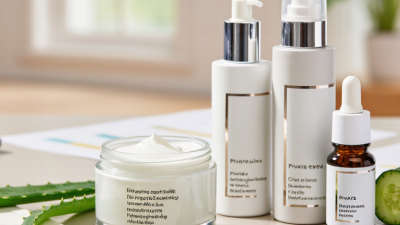
Private label skin care suppliers are manufacturers that create products for another company’s brand. They may provide formulas, packaging, filling, labeling, and quality checks. The buyer usually selects an existing formula or requests a customized version. This model helps businesses launch cleansers, creams, serums, and body products without building a factory.
A reliable supplier should explain each production stage clearly. Ask for ingredient specifications, stability testing, microbiological testing, and batch records. These documents help confirm product safety and consistency. Suppliers should also follow applicable cosmetic regulations in every target market. Their facility, quality system, and labeling process deserve careful review.
In practical sourcing work, samples can reveal problems that documents miss. A cream may feel greasy after ten minutes. A pump may clog during repeated use. The scent may also change after storage. Small details matter. Requesting several samples is wiser than approving the first one. Still, supplier evaluation is not always simple. A polished presentation does not prove strong manufacturing control. Some buyers focus too heavily on price and overlook testing, lead times, or communication. That mistake can become expensive.
Look for clear minimum order quantities, realistic timelines, and written quality agreements. Confirm who owns the formula and how changes are approved. A dependable supplier should welcome reasonable questions, provide traceable records, and admit limitations when they exist. Reliability is shown through consistent evidence, not promises.
2026 Best Private Label Skin Care Suppliers? - What Are Private Label Skin Care Suppliers?
| Evaluation Dimension | What a Reliable Supplier Typically Provides | Documents or Evidence to Request | Why It Matters to Buyers | Recommended Assessment |
|---|---|---|---|---|
| Private Label Model | Pre-formulated products that can be sold under the buyer’s own brand name, usually with customizable labels, packaging, and product presentation. | Product catalogue, formulation brief, customization menu, sample policy, and written service terms. | Clarifies whether the supplier supports true private label production rather than only reselling finished goods. | Confirm what can be changed: formula, fragrance, color, packaging, label, and product claims. |
| Product Categories | Common categories include cleansers, toners, serums, moisturizers, masks, exfoliants, body care, sun-care products, and hair-care products. | Current product specification sheets and ingredient lists using recognized INCI names. | A broad but clearly documented range can help build a coordinated skin care collection. | Check whether the supplier has relevant experience with the intended product type and skin concern. |
| Minimum Order Quantity | MOQs vary by formula, container, decoration method, and whether the product is stock or newly developed. Stock products generally require fewer units than custom formulas. | Written MOQ schedule for samples, stock products, custom formulas, packaging, and reorders. | MOQ directly affects startup cash flow, inventory risk, and product testing plans. | Compare the complete first-order quantity, including product, packaging, labels, and spare units. |
| Formula Development | Services may include stock-formula selection, adjustment of texture or fragrance, ingredient substitution, and development of a new formula. | Development timeline, revision policy, sample approval process, and formula ownership terms. | Clear development procedures reduce misunderstandings about performance, claims, and final specifications. | Require written approval of the final formula before bulk production begins. |
| Quality Management | Controlled procedures for raw-material receipt, batch production, filling, packaging, finished-product release, and traceability. | Quality manual summary, batch records, release criteria, inspection procedure, and corrective-action process. | Documented controls help maintain consistent product quality between production batches. | Ask how deviations, customer complaints, product returns, and recalls are handled. |
| Manufacturing Practice | Cosmetic manufacturing should follow applicable good manufacturing practice principles, including hygiene, controlled operations, personnel training, and documented processes. | Applicable GMP certificate or audit evidence, site details, and certificate scope and validity dates. | GMP-based controls support safer and more consistent manufacturing, although a certificate alone does not guarantee product performance. | Verify that the evidence applies to the actual production site and relevant product category. |
| Ingredient Transparency | Complete ingredient disclosure, allergen information where applicable, usage levels for regulated ingredients, and information about restricted substances. | INCI ingredient list, raw-material specifications, allergen statement, and restricted-substance review. | Transparent ingredient information supports product labeling, safety review, and market-specific compliance. | Have a qualified regulatory professional review ingredients before making market-specific claims. |
| Safety and Stability Testing | Testing may include microbiological analysis, preservative efficacy assessment, stability testing, compatibility testing, and safety evaluation. | Certificate of Analysis, microbiological results, stability data, packaging-compatibility data, and safety assessment records. | Testing helps identify contamination, formula degradation, packaging interaction, and shelf-life risks. | Confirm that testing covers the final formula in the final packaging configuration. |
| Packaging Options | Typical options include bottles, jars, tubes, pumps, droppers, airless containers, cartons, and protective shipping packaging. | Packaging catalogue, material specifications, decoration options, compatibility results, and packaging MOQs. | Packaging affects product protection, user experience, sustainability, shipping cost, and perceived value. | Request physical samples and test closure performance before placing a large order. |
| Label and Claims Support | Basic support may cover ingredient order, net contents, batch coding, usage directions, warnings, and manufacturer information. | Label proof, claim-support documents, artwork requirements, and market-specific labeling checklist. | Incorrect labels or unsupported claims can cause shipment delays, regulatory action, or product withdrawal. | Do not rely on marketing language without evidence appropriate to the target market. |
| Certifications and Standards | Relevant evidence may include cosmetic GMP compliance, quality-system documentation, organic or natural certification where applicable, and facility audit records. | Current certificates showing issuing body, facility, scope, certificate number, and expiry date. | Verified certifications can provide additional assurance when they match the product and production site. | Check authenticity and confirm that certification claims apply to the specific finished product. |
| Production Lead Time | Lead time depends on formula availability, sample approval, packaging procurement, artwork approval, production capacity, and testing requirements. | Estimated timeline by production stage, order milestone schedule, and delay-notification procedure. | Accurate planning is important for launches, seasonal campaigns, retail appointments, and inventory replenishment. | Obtain a written schedule covering sampling, purchasing, manufacturing, testing, and dispatch. |
| Batch Traceability | Each production batch should be identifiable through a batch or lot code connected to production and release records. | Sample batch code, traceability procedure, retention-sample policy, and recall procedure. | Traceability supports complaint investigation, targeted recalls, and inventory control. | Confirm how quickly the supplier can identify affected raw materials and finished goods. |
| Export and Shipping Support | Support may include export documents, commercial invoices, packing lists, carton details, transport coordination, and shipment tracking. | Sample export document set, shipping terms, carton dimensions, product classification, and insurance options. | Complete logistics information helps buyers calculate landed cost and reduce customs problems. | Clarify responsibility for duties, taxes, freight, customs clearance, and damaged shipments. |
| Commercial Evaluation | A suitable supplier should provide transparent pricing for samples, formula work, packaging, testing, production, artwork, freight, and reorders. | Itemized quotation, payment terms, validity period, replacement policy, and change-order terms. | Total cost is more meaningful than the unit price alone and helps reveal hidden launch expenses. | Compare suppliers using the same product specification, quantity, packaging, shipping terms, and testing scope. |
Note: Requirements, testing, labeling, claims, and documentation vary by destination market. All supplier information and regulatory evidence should be independently verified before purchase or launch.
Related Posts
-
2026 Best White Label Skin Care Products for Global Buyers
-
What Is Private Label Skin Care and How Does It Work?
-

Top White Label Skin Care Products for 2026 Buyers Guide?
-

How to Start a Private Label Skin Care Line for Global Buyers?
-
Why Choose Wholesale Skincare for Your Business?
-
How to Start a Private Label Cosmetics Brand