How to Start a Private Label Cosmetics Brand

Starting a cosmetics brand can begin with a simple observation: customers keep asking where you bought that moisturizer. Turning that interest into a business takes more than a polished logo. A private label cosmetics brand uses products made by a third-party manufacturer, often with options to select formulas, packaging, and branding. The arrangement can reduce development time, but it does not remove the need for careful decisions.

This guide explains how to shape a focused product concept, assess potential manufacturers, and plan a launch with realistic expectations. You will learn what to ask about ingredients, product testing, minimum order quantities, packaging, and production timelines. A sample jar, a clear ingredient list, and a written quote can reveal more than a glossy sales deck. Check claims and product information against reliable sources, and confirm that suppliers can provide the documentation your business needs. Requirements vary by market, so seek qualified guidance before selling.

Start small. A broad catalog may look impressive, yet it can tie up cash in inventory that moves slowly. Consider who the product serves, what makes it useful, and whether the price leaves room for shipping, marketing, and returns. The numbers may feel less exciting than choosing a brand name. Still, they matter. Even experienced founders can misjudge demand; a careful pilot order may help, though it cannot guarantee success. With practical research and honest product claims, you can build a stronger foundation for a cosmetics brand that earns customer trust.
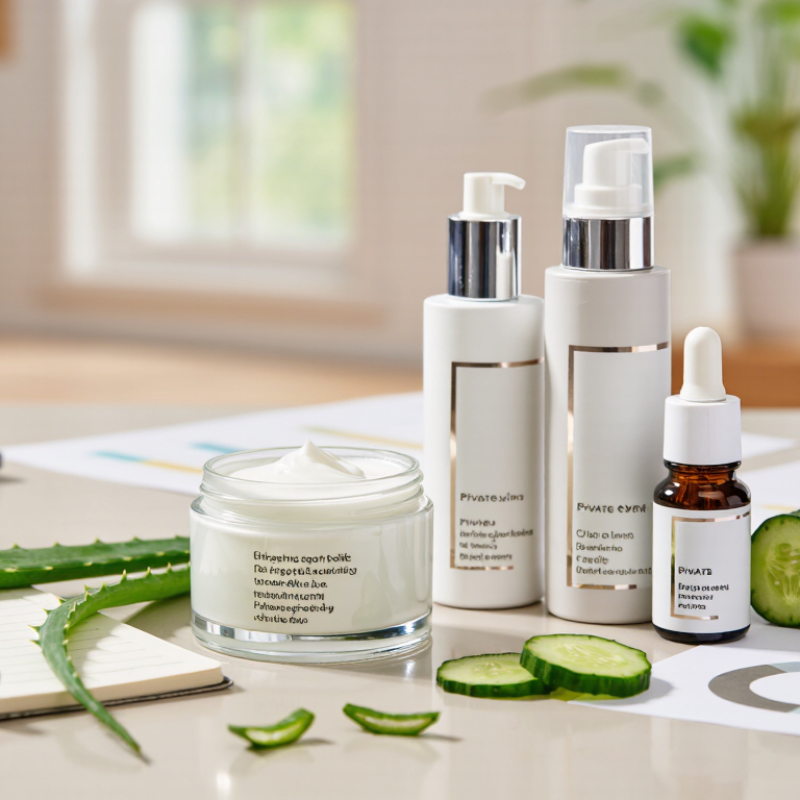
How to Start a Private Label Cosmetics Brand

Define Your Brand Concept, Target Market, and Product Positioning

A private label cosmetics brand starts with a clear idea, not a product catalog. Define the feeling, function, and daily moment your brand should own. A quiet skincare line might serve commuters with dry, tight skin after long train rides. A bold color line could focus on quick, expressive looks for evening events. Keep the promise specific. “Better beauty” says very little. I learned this after comparing several product concepts that sounded attractive but served the same customer.

Describe one primary customer in practical detail. Note their age range, routine, budget, climate, and buying concerns. Read reviews, conduct short interviews, and ask what they dislike about current products. Do not rely only on assumptions. A customer may value refillable packaging, yet reject it if the container feels difficult to clean. Small tests expose that gap. Record repeated language from shoppers; it can guide product names and website copy.

Positioning connects your concept to a defensible reason to choose you. Decide whether you compete through texture, shade accessibility, simple routines, transparent sourcing, or another measurable benefit. Request ingredient specifications, safety documents, stability information, and samples from qualified manufacturers. Check labeling and cosmetic requirements in every market you plan to enter. Avoid medical promises unless legally supported. Your first concept may be too broad. Revise it after sample testing, customer feedback, and cost review. A smaller promise can be more credible. Define the hero product, acceptable price, and proof customers should see before purchase.

Choose Cosmetics Products and Private Label Manufacturing Partners

Choose a focused product range that solves a clear customer need. A gentle cleanser, daily moisturizer, and tinted balm may be easier to develop than ten unrelated items. Compare texture, scent, packaging, and expected shelf life before committing. Keep it practical. Ask potential customers what they would actually use, not only what looks appealing in a sample photo.

A private label manufacturer should explain its process in plain language. Request ingredient specifications, quality-control procedures, stability-test details, and packaging compatibility information. Ask how minimum order quantities affect unit cost and whether small pilot runs are available. Get timelines in writing, including sample revisions and production. Slow replies during early discussions can signal future delays. Still, one missed email is not proof of poor service.

Test samples under realistic conditions: apply the product repeatedly, check how it feels after several hours, and inspect the container for leaks or changes. Keep notes on each version; memory gets unreliable. Compare the manufacturer’s promises with the documents and samples provided. A low quote can be tempting, but unclear testing or vague ingredient records deserve follow-up. I would not choose a partner on price alone. Even careful planning can miss something, so leave room in the schedule for another sample round.

Develop Formulas, Packaging, and Brand Identity

A private label cosmetics brand begins with a formula that performs consistently, not just one that feels appealing in a sample. Define the product’s texture, scent, finish, and intended skin type before discussing manufacturing. Request ingredient specifications and test batches for stability, preservation, and compatibility with the chosen container. A serum that separates or changes color in a clear bottle can weaken trust quickly. Test it under realistic conditions, including temperature changes and repeated dispensing. Keep records of formula versions and supplier decisions; small details are easy to forget.

Packaging and identity should make the product easy to recognize and use. Check that the pump dispenses the right amount and that the label remains legible on a curved bottle. McKinsey’s 2023 beauty-market analysis projected the global beauty market could reach $580 billion by 2027, underscoring the scale of competition. A polished look alone will not set a new product apart. Choose a clear visual cue, such as a restrained color palette or tactile cap, then test it with potential customers. Their reactions may challenge your first choice. That is useful. Sustainability claims also need care: favor specific, verifiable details about packaging materials over broad promises. A plain sample bottle can reveal more than a mood board.

Typical pH Ranges for Cosmetic Formulation

Compare common pH ranges to help guide early formula development for a private label cosmetics brand.

Ranges are common formulation examples, not regulatory limits. Actual targets depend on ingredients, intended use, compatibility, and product testing.

Meet Regulatory, Safety, and Labeling Requirements

How to Start a Private Label Cosmetics Brand

A private label cosmetics brand needs more than attractive packaging. Each product should meet the rules of its intended market before production begins. Work with a qualified safety assessor to review ingredients, exposure levels, contamination risks, and product stability. Follow suitable cosmetic good manufacturing practices, including clean equipment, controlled storage, and documented batch records. Keep supplier certificates and test results in one traceable file. Small gaps can become expensive problems.

Tips: Build a compliance checklist for every formula. Confirm ingredient names using accepted cosmetic nomenclature. Review restricted substances and allergen requirements in each sales region. Test microbial quality, packaging compatibility, and shelf-life performance. Do not treat a supplier’s document as complete proof. Documents can be outdated. Ask for current versions and verify unusual claims.

Your label should clearly show the product identity, net contents, ingredient list, responsible business details, warnings, and batch or lot information where required. Use claims that your evidence can support, such as “helps moisturize,” rather than promising medical results. Keep claim records, including test methods and approval dates. A professional-looking label may still fail if the text is too small or incomplete. Language requirements also vary by market. Regulatory review before printing is safer than replacing thousands of labels later. Mistakes happen, but repeating them is a choice.

Set Pricing, Sales Channels, and Launch Plans

Starting a private-label cosmetics brand begins with a price customers can understand. McKinsey & Company projects the global beauty market could approach $580 billion by 2027, with about 6% annual growth. Growth does not excuse careless margins. For example, a product costing $4.20 landed might retail at $18. That leaves roughly 77% gross margin before marketing, shipping, returns, and platform fees. Fees change quickly. Model payment processing, sample costs, and damaged inventory separately. I would test two price points with small batches and compare conversion rates. My first forecast would probably be too optimistic. That mistake is useful if the test stays affordable.

Channel selection should follow customer behavior, not personal preference. NIQ’s State of Beauty 2024 report found that e-commerce represented about 26% of global beauty sales. Use an owned website for ingredient education, shade guidance, subscriptions, and email capture. Marketplaces can provide demand, but their fees and limited customer access require careful forecasting. Offline sampling still matters. Place ten testers in a clean consultation area and record objections word for word. Plan a 90-day launch. Weeks one and two should cover supplier verification, stability checks, packaging samples, and compliant product claims. Weeks three and four can build product pages and collect waitlist emails. Launch with one hero product, three short videos, and a controlled discount. Track conversion, repeat purchase, refund reasons, and customer questions weekly. Do not hide weak results. A small launch may reveal that the formula, price, or message needs revision. Leave room for that.

How to Start a Private Label Cosmetics Brand - Set Pricing, Sales Channels, and Launch Plans

Illustrative planning model in USD for a small initial launch. Costs, fees, regulations, minimum order quantities, and timelines vary by product, supplier, market, and sales platform; verify them before committing funds.

Planning Area Dimension Illustrative Plan Decision or Checkpoint Suggested Timing
Product scope Initial assortment Launch with 1–3 products in one focused category, such as skincare or color cosmetics. Choose products that share a clear customer need and can be tested within the available budget. Weeks 1–2
Product sourcing Supplier evaluation Request written quotes, sample products, ingredient information, packaging specifications, lead times, and minimum order quantities from multiple qualified suppliers. Compare total landed cost and documentation—not only the quoted unit price. Confirm who is responsible for required testing and records. Weeks 2–6
Compliance Market and product requirements Identify the rules that apply in each intended sales market, including ingredient restrictions, safety substantiation, labeling, claims, and responsible-party obligations. Review applicable requirements with a qualified regulatory professional before finalizing labels or making product claims. Before production approval
Unit economics Illustrative landed unit cost $6.50 per unit, including the product and an assumed allocation for inbound freight and packaging. Replace this assumption with a supplier quote and a complete landed-cost calculation, including duties where applicable. Before setting prices
Pricing Direct-to-consumer retail price $30.00 per unit. Check customer willingness to pay, competing offers, product size, positioning, and expected promotional discounts. Weeks 4–8
Pricing Illustrative direct gross margin 78.3% before marketing, payment processing, fulfillment, returns, overhead, and taxes; calculated as ($30.00 − $6.50) ÷ $30.00. Do not treat gross margin as net profit. Model variable selling and operating costs separately. Before launch
Wholesale pricing Illustrative wholesale price and margin $15.00 wholesale price per unit; 56.7% gross margin before other costs, calculated as ($15.00 − $6.50) ÷ $15.00. Confirm the price leaves room for the retailer’s economics, freight terms, discounts, and any distributor margin. Before retailer outreach
Retailer economics Illustrative retailer margin 50% at a $30.00 suggested retail price and $15.00 wholesale price, before retailer operating costs. Actual retailer requirements vary; confirm pricing, order quantities, returns, payment terms, and promotional expectations directly. During channel discussions
Sales channel Owned online store Use as the primary launch channel to present product details, policies, and brand information directly to customers. Budget for website tools, payment processing, customer support, shipping, and returns; test the checkout process before launch. Build in weeks 6–10
Sales channel Online marketplaces Consider after confirming product eligibility, category requirements, fee schedules, fulfillment options, and listing policies. Calculate contribution per order using the current platform fees and fulfillment charges; these vary by marketplace and product. Evaluate in weeks 8–12
Sales channel Independent retail and professional accounts Prepare a concise wholesale price list, product information, case-pack details, and samples for targeted outreach. Start with a manageable number of prospects and track reorder interest, sell-through feedback, and payment terms. Outreach from weeks 10–14
Launch inventory First production quantity Set the order quantity from the supplier’s minimum, cash available, shelf life, and a conservative sales forecast. Avoid using an untested demand forecast as a guarantee. Plan how slow-moving or short-dated inventory will be handled. Before purchase order
Launch budget Core budget categories Allow for product and packaging, testing or compliance work, freight, photography and content, website setup, launch promotion, and a contingency reserve. Obtain quotes for each category and keep operating cash separate from inventory funds. Weeks 1–6
Marketing Pre-launch preparation Prepare accurate product pages, ingredient and usage information, customer service answers, and a small library of product photography. Use only substantiated claims; ensure descriptions and images match the actual product and package. Weeks 8–12
Launch plan Soft launch Open to a limited audience or a controlled initial quantity before expanding promotion. Check checkout, order confirmation, inventory tracking, fulfillment, customer questions, and return handling. Launch week
Performance review Weekly operating metrics Track units sold, revenue, contribution per order, conversion rate, average order value, return rate, inventory on hand, and customer feedback. Use results to adjust inventory, pricing, product pages, and channel spending; set targets from actual baseline performance. First 8–12 weeks after launch
Planning principle: validate costs and compliance first, test demand with a controlled launch, and scale only when unit economics and customer feedback support it.
Scroll to Top