Choosing makeup manufacturers is not simply a search for attractive packaging or a low unit price. Global buyers need partners who can turn a brief into consistent products, meet agreed quality specifications, and communicate clearly when timelines change. The details matter: a lipstick’s color should remain consistent across batches, while a foundation sample should be checked under different lighting. Small discrepancies can become expensive at scale.
Cosmetic chemist and educator Perry Romanowski is known for practical guidance on cosmetic formulation. A concise paraphrase of his approach is: “A product must work reliably, not merely look appealing.” This is a paraphrase, not a verified verbatim quotation. It reflects an important point for buyers: marketing claims cannot replace evidence about formulation, stability, and manufacturing controls.
This guide examines makeup manufacturers through the questions purchasing teams should ask: What products do they specialize in? Can they support custom development or private-label production? How do they document quality checks, ingredient specifications, and sample approvals? It also considers communication, production capacity, packaging options, and experience serving international clients. These factors help buyers compare suppliers on more than price.
There is no perfect checklist. A polished website does not prove factory performance, and a promising sample cannot guarantee every future batch. Buyers should verify claims, request relevant documentation, and agree on clear acceptance criteria before placing substantial orders. The aim is not to find a flawless supplier, but a capable partner whose strengths and limitations are understood.
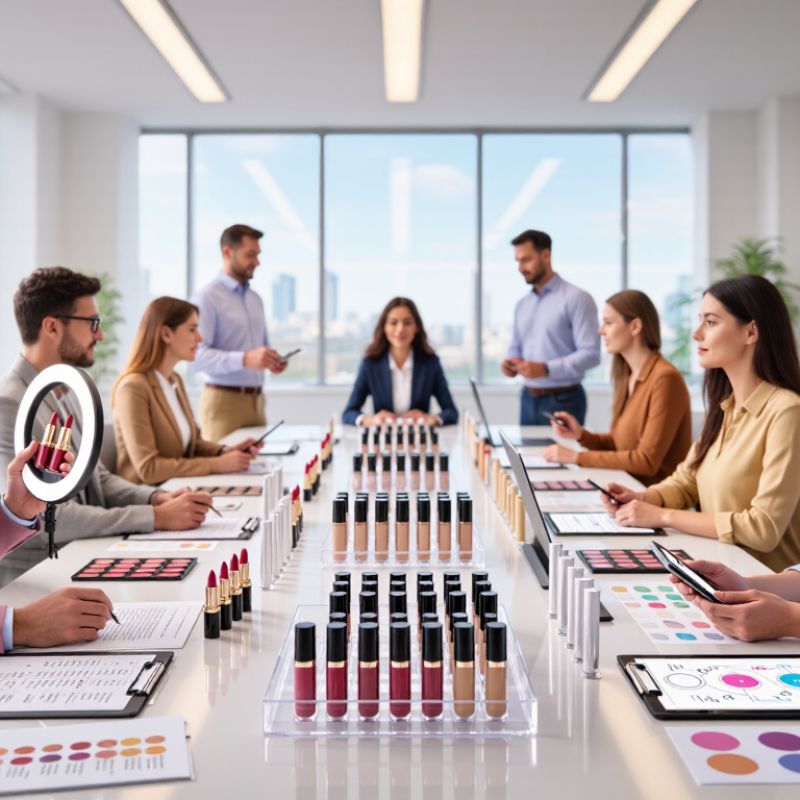
A makeup manufacturer develops and produces cosmetic products for other businesses or its own product lines. Its work may cover formula development, ingredient sourcing, filling, packaging, and quality checks. Some manufacturers also offer private-label services, applying a buyer’s chosen name and design to existing formulas. Others create custom products from a detailed brief. The exact service range varies, so buyers should ask what happens at each production stage.
A typical project begins with a product brief: texture, shade range, packaging, target price, and expected order size. The manufacturer may prepare samples, then adjust the formula after feedback. A shade can look different under warm shop lighting than in daylight. Small details matter. Once approved, production teams fill and pack the product, while quality staff check items such as appearance, weight, and packaging condition. Buyers should request clear specifications and suitable product records. A sample is useful, but it may not behave exactly like a large production batch. That deserves a second check.
Tips: Ask about minimum order quantities, sample fees, lead times, and quality procedures before committing. Request written specifications for the formula, packaging, and acceptance checks. Keep feedback specific; “too thick” is less helpful than “does not spread evenly with a fingertip.” Leave time for revisions. Samples can take longer than expected.
Global buyers usually work with several types of makeup manufacturers, each offering a different level of control. OEM manufacturers produce formulas and products to a buyer’s specifications. They suit teams with established formulas, packaging plans, and clear performance targets. A buyer might provide a foundation shade range and request matching fills in specific bottle sizes. Small details matter. A slight shade shift can be obvious across a retail display.
ODM manufacturers develop existing or customized formulas and help buyers adapt them for their markets. Private-label manufacturers offer ready-made products that buyers can package under their own identity, often with shorter development timelines. These options can reduce setup work, but the formula may be less exclusive. That trade-off is easy to underestimate. Buyers should request samples, ingredient specifications, and batch documentation before approving production.
Some manufacturers provide end-to-end services, including formulation, filling, packaging, and quality checks. Others specialize in particular categories, such as lip color, complexion products, or eye makeup. The right fit depends on order volume, packaging needs, and how much technical support a buyer requires. Ask how shade consistency is checked between batches, what happens when a sample differs from a production run, and which tests are performed. Answers should be specific, not just reassuring. Even experienced teams can miss a practical issue, like a cap that loosens during shipping.
A factory tour should reveal more than polished sample trays. Buyers should inspect batch records, raw-material checks, shade-matching controls, and how staff handle rejected units. Cosmetics Europe reported European cosmetics and personal-care retail sales of €96 billion in 2023, showing the scale of a market where quality failures can be costly. Ask for recent audit findings, corrective-action records, and documented production capacity—not only a certificate on the wall. ISO 22716 offers recognized guidance for cosmetic good manufacturing practices, but buyers still need to verify how procedures work on the production floor.
Test samples under real conditions. Check color consistency across batches, packaging fit, label accuracy, and wear after several hours. Request stability and compatibility test summaries for the intended formula and pack. Review ingredient specifications, allergen information, and change-control processes with qualified technical staff. A low quote can hide assumptions about minimum order size, testing, or lead time. Clarify them in writing. It is easy to overlook this.
Tips: Ask the manufacturer to trace one finished lot back to its incoming materials. Compare the paperwork with the physical samples. If answers are vague, pause and ask again. A small pilot order can expose gaps before larger commitments, though it cannot guarantee every future batch will match.
Global buyers should assess manufacturers against the requirements of each destination market. Cosmetic good manufacturing practices, such as those described in ISO 22716, help structure production, hygiene, and recordkeeping. They do not replace local regulatory checks. A qualified manufacturer should explain how it verifies ingredient suitability, product safety, and labeling requirements for the intended markets.
Ask for traceable records linking ingredient lots to finished batches. Review stability data, microbiological test results where relevant, and packaging compatibility checks. Labels should be checked for ingredient declarations, warnings, and required language. Small details matter. A slightly altered pump can affect dispensing or product exposure, so packaging tests should reflect real use.
A site audit can reveal how staff handle weighing, cleaning, and batch deviations. Ask how problems are documented and corrected, not just whether procedures exist. Records tell the story. Still, a polished audit file is not proof that every batch will perform consistently. Request recent test reports and clear acceptance criteria, then compare them with product specifications. If a manufacturer cannot explain a result in plain language, pause and investigate before approving production.
ISO 17516:2014 specifies microbiological limits for finished cosmetics.
Category 1 covers products intended for children under three, the eye area, or mucous membranes; Category 2 covers other cosmetics. ISO 17516 also requires the absence of specified microorganisms, including P. aeruginosa, S. aureus, C. albicans, and E. coli, in the tested sample. Buyers should also assess GMP practices (ISO 22716) and market-specific rules, such as the EU Cosmetics Regulation and U.S. MoCRA requirements. Requirements vary by product and destination market.
Global makeup sourcing starts with a clear product brief. Define the formula type, shade range, packaging, target price, and expected order volume. Then compare manufacturers on relevant experience, production capacity, quality controls, and communication—not just quoted cost. Request samples and review texture, scent, color, and packaging under ordinary use. A sample can look right in a photo and feel wrong on skin.
Before placing an order, confirm the specification, ingredient information, test records, production timeline, and responsibilities for quality checks in writing. Ask how batches are identified and how defects are handled. Requirements differ by destination, so have qualified local professionals verify applicable product and labeling rules. Details get missed. Even experienced buyers may overlook a small label change or a revised delivery date.
Tips: Keep one approved sample as a reference, and record every change. Ask for a dated production sample before full manufacturing. Check carton labels and shipping documents before dispatch. A delayed reply is not automatically a warning, but vague answers deserve follow-up. Ask again. Sourcing rarely runs perfectly; clear records make problems easier to spot and resolve.