
Carton Box Material is not one substance. It is a carefully layered structure chosen to protect products during storage and transport. A common corrugated carton contains flat linerboard and a wavy fluted layer between them. Those visible layers help cushion a glass jar, steady a stack of goods, or absorb everyday handling. Small details matter.
The paper may use recycled fibers, newly made fibers, or a blend of both. A starch-based adhesive often bonds the layers, while printing inks and surface treatments add color or help resist moisture. These choices can affect strength, weight, appearance, and recovery after use. A folding carton for cereal, for example, is usually made from paperboard rather than corrugated board. Similar name, different build. Circular-economy pioneer Ellen MacArthur offers a useful lens: “A circular economy is based on the principles of designing out waste and pollution, keeping products and materials in use, and regenerating natural systems.” Her words are not a carton specification, but they prompt a practical question: what happens to the box after delivery?
This guide examines what carton boxes are made of, how their layers work, and why material choices vary by use. It also considers trade-offs that are easy to overlook, including coatings that improve performance but may complicate recycling. There is no single best material for every shipment. Sometimes the right answer depends on the product, the route, and the local recovery system. Some choices deserve a second look.
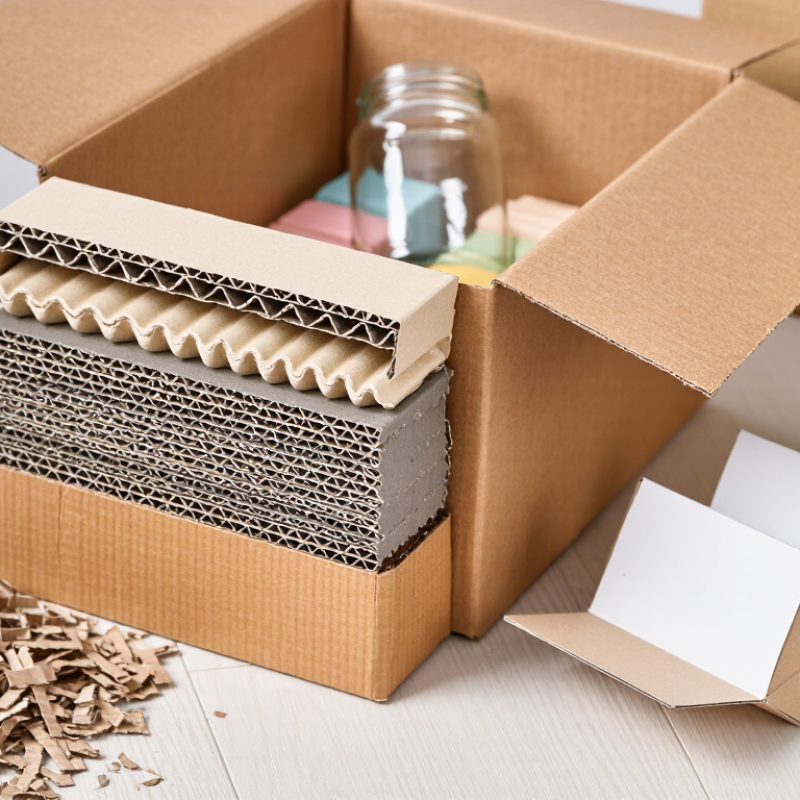
Carton boxes are made mainly from paper-based materials. Folding cartons usually use paperboard, while shipping cartons often use corrugated board: flat liner sheets bonded to a fluted, wave-shaped layer. The fibers come from recovered paper, such as used boxes, and fresh wood pulp. Water helps form the sheets; starch-based adhesive bonds corrugated layers. Some cartons also use printing inks or protective coatings.
The fiber mix varies by product and region. FEFCO’s 2023 European corrugated-board data reports that recovered paper supplies about 89% of the industry’s fiber input. Fresh fibers remain useful when extra strength or stiffness is needed. The U.S. Environmental Protection Agency reported a 96.5% recycling rate for corrugated boxes in 2018. That figure describes a specific year and material category, not every carton. Food residue, wet fibers, and attached materials can complicate recycling, so a high reported rate does not mean every box is recovered.
Tips: Choose the lightest board that safely protects the product. Keep cartons dry and remove loose packing materials before recycling. A small design detail matters: unnecessary coatings can make recovery less straightforward.
Carton paperboard begins with cellulose fibers, commonly recovered from used paper or separated from wood. With recycled feedstock, bales are mixed with water in a pulper until the paper breaks into a slurry. Screens remove tape, plastic, and other larger pieces; cleaning equipment separates heavier grit. The fibers are then refined, which gently roughens and fibrillates their surfaces so they bond more closely. Not every fiber responds alike. Some are shorter or worn, and that can affect sheet strength.
For fresh wood fiber, mills typically debark logs, make chips, and separate fibers through mechanical or chemical pulping. The prepared pulp is diluted with water, blended to meet the board’s intended properties, and spread across a moving forming screen. Water drains away as fibers settle into a thin, interlocking mat. Then large rollers press out more moisture, and heated cylinders dry the sheet. The board may be pressed or coated for a smoother surface, depending on its use. It is cut and wound into rolls for later conversion into carton or corrugated board. Small process changes matter: moisture, fiber mix, and refining intensity can shift stiffness and folding performance. That balance is not always simple. A stronger sheet may need more fiber or energy, so mills adjust the recipe rather than relying on one setting.
Corrugated carton board is built from flat paper sheets and a wavy inner sheet called fluting. The flat sheets are linerboards; they form the outer faces and help resist punctures and stacking pressure. Fluting creates small arches between them, adding stiffness while leaving air spaces that cushion knocks. A simple sandwich.
In single-wall board, one fluted sheet sits between two liners. Double-wall board uses three liners and two fluted layers, often with different flute profiles for a balance of cushioning and strength. Triple-wall board adds another liner and flute layer for heavier loads. The flute height and spacing affect thickness, crush resistance, and how well the board bends around a product. Small details matter.
The layers are usually bonded with a starch-based adhesive, applied along the flute tips. Paper may contain recycled fiber, new fiber, or a blend; its grade and condition influence board performance. A cut edge makes the construction easy to see: paper ridges, thin glue lines, and hollow channels. Yet a tidy diagram can make the structure seem more uniform than it is. Moisture, manufacturing variation, and storage can change how a carton performs, so layer count alone does not tell the full story.
| Board Component | Position in the Board | Common Material | Main Function | Useful Detail |
|---|---|---|---|---|
| Outer liner | Outside surface of the corrugated board | Kraftliner or testliner paper | Provides a printable, protective surface and contributes to box strength and resistance to handling. | Kraftliner is made mainly from virgin kraft fibers; testliner commonly contains recycled fibers. Actual composition varies by grade. |
| Fluting medium | Corrugated, wave-shaped layer between the liners | Corrugating medium paper | Creates the board’s flutes, helping the board resist compression and cushioning impacts. | The flute profile and paper grade affect board thickness, cushioning, and stacking performance. |
| Inner liner | Inside surface of the board | Kraftliner or testliner paper | Forms the interior face of the box and helps support the fluting and protect packed goods. | Inner and outer liners may use different paper grades to meet strength, appearance, or cost requirements. |
| Starch adhesive | At the flute tips where paper layers are joined | Typically a starch-based adhesive | Bonds the fluting medium to the liner papers to form a stable corrugated structure. | Adhesive is applied during board manufacture; it is not a paper layer. |
| Single-face board | One liner bonded to one fluted medium | One liner plus one corrugated medium | Provides a flexible cushioning material, often used as protective wrapping or as a component in other packaging. | It has two paper layers and is not the usual finished construction for a standard carton box. |
| Single-wall board | One fluted medium between two liners | Two liners plus one corrugated medium | Provides a common balance of protection, stiffness, and material use for shipping cartons. | It has three paper layers; flute type and paper grades determine its final performance. |
| Double-wall board | Two fluted mediums separated by a liner, with outer liners on both faces | Three liners plus two corrugated mediums | Offers greater thickness and strength than single-wall board for heavier or more demanding shipments. | It has five paper layers, and the two flute profiles can be selected to balance cushioning and stacking strength. |
| Triple-wall board | Three fluted mediums with liners between and on both outer faces | Four liners plus three corrugated mediums | Provides a heavy-duty structure for substantial loads and demanding handling conditions. | It has seven paper layers and is commonly specified when a strong, rigid corrugated pack is needed. |
| Optional surface treatment | Applied to one or both board faces | May include a water-resistant coating, barrier treatment, or laminated layer | Can improve resistance to moisture, grease, scuffing, or other specific conditions. | These treatments are not present in every carton and may affect recyclability depending on their material and local recycling systems. |
Carton box material is mainly paperboard made from wood pulp, recycled fibers, or a blend of both. Additives help the sheet survive converting, filling, and transport. Starch can strengthen fiber bonds, while sizing agents reduce how quickly water or ink sinks into the surface. Mineral fillers may improve smoothness and print clarity, though too much can make board less stiff. Not always.
Coatings change how a carton handles moisture, grease, scuffing, and printing. A thin clay coating creates a smoother face for fine text and images; wax or polymer layers can slow water penetration. These layers may also complicate recycling, depending on their composition and local processing systems. Wet-strength additives can help a carton retain shape in damp storage, but they do not make it waterproof. That matters. On a packing line, a poorly matched coating may cause ink to rub off or glue to bond unevenly. I’ve found that performance is best judged against the actual journey: a chilled shelf, a humid warehouse, or a rough delivery route. Ask for board specifications and test samples under realistic conditions; a small carton can reveal problems that a neat datasheet misses.
How common additives and coatings affect moisture resistance
Corrugated cartons combine linerboard, fluted paper, and starch adhesive. Sizing additives can improve water resistance, while barrier coatings such as wax or polyethylene provide stronger moisture protection. Ratings are a general qualitative comparison, not laboratory measurements; results vary with material grade, coating weight, and test conditions.
Carton materials vary with the job they need to do. A small retail carton holding tea or soap often uses smooth folding boxboard. It is light, easy to print, and stiff enough to keep its shape on a shelf. A carton for heavier goods may use thicker board or a corrugated structure. The fluted middle layer helps absorb knocks during delivery. It matters.
Moisture and contact with food also affect material choices. A carton for dry cereal may use paperboard with a thin inner barrier to help protect the contents. A chilled pastry carton may need better resistance to dampness, since condensation can soften untreated paper. Liquid cartons typically combine paperboard with barrier layers, because paper alone cannot reliably contain liquid. More layers can improve protection, but they may make sorting and recycling more difficult in some local systems. Not always obvious.
Printing needs matter, too: a smooth outer face gives fine text and images, while a rugged shipping box prioritizes strength over polish. There is no perfect carton for every use. The best choice depends on weight, handling, storage conditions, and how the package will be disposed of.
A mismatch can be subtle: a box may look sturdy yet fail at a damp loading area.