Top Custom Cellophane Self Adhesive Labels Suppliers
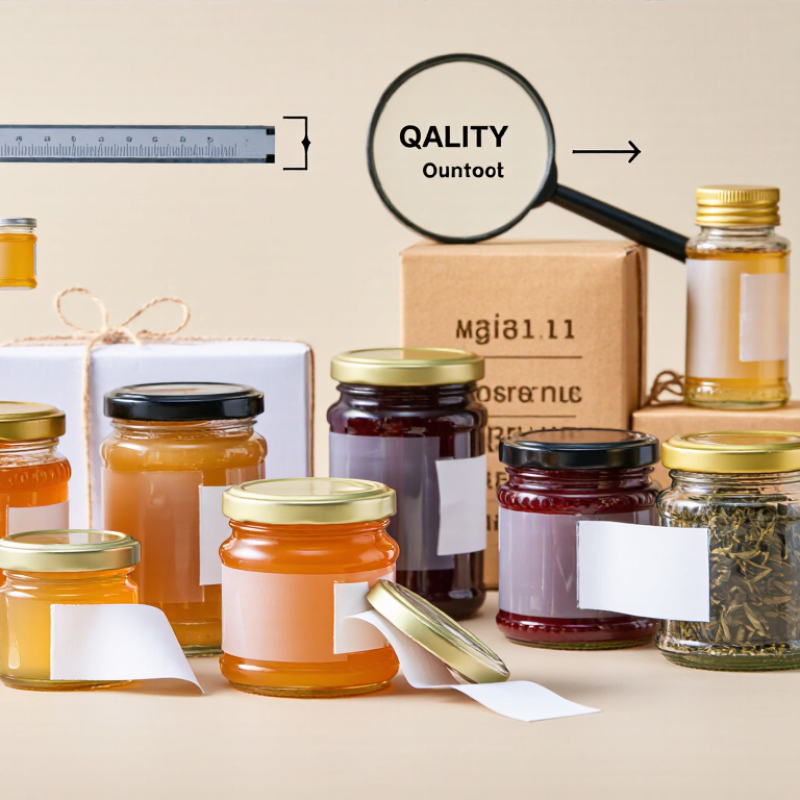
custom cellophane self adhesive labels help brands pair a clear, glossy finish with practical product information. On glass jars, bottles, and gift boxes, the transparent film can let the container’s color and contents remain visible. The result depends on more than appearance. Adhesive performance, label dimensions, print clarity, and surface conditions all matter.
Industry reports offer useful context for supplier selection. Smithers’ The Future of Labels to 2029 examines market development, materials, and printing technologies, while FINAT’s RADAR reports track trends in the European self-adhesive label sector. Together, these sources underline a changing market: buyers need attractive labels, but also consistent quality and dependable supply. A report cannot predict how a label will behave on every container, though. Testing samples on the actual packaging remains essential.
This guide to Top Custom Cellophane Self Adhesive Labels Suppliers focuses on practical questions: material options, printing capabilities, customization, quality checks, and communication. Ask suppliers how they assess adhesion on your specific surface, and request samples before placing a large order. Inspect the label under real lighting. Check the edges after handling. Small details matter.
Not every supplier will suit every project. Compare evidence, not promises, and confirm specifications in writing. Reliable choices are built through careful checks, although some details are easy to miss.
Define Cellophane Label Stock: Regenerated Cellulose Film and Key Uses
Cellophane label stock is a thin, transparent film made from regenerated cellulose, a material derived from plant cellulose pulp. The pulp is processed, formed into film, and dried. It is not ordinary paper, even when its surface feels slightly crisp. Some grades receive coatings to improve printability or moisture resistance, so performance varies by construction.
For a self-adhesive label, the film is combined with printable treatment, adhesive, and a release liner. Each layer matters. On a cool glass jar, for example, condensation can affect how well the label bonds. Adhesive selection should match the container surface and expected conditions; a clear label can still wrinkle during application. That detail is easy to overlook.
Common uses include labels on food jars, gift packaging, and personal-care containers, where a see-through look lets the product remain visible. Cellulose film can offer a plant-derived alternative to many plastic films, but it is not automatically compostable in every form. Coatings, inks, and adhesive layers may change disposal options. I would check the complete label specification rather than judging by the film alone.
Compare Film Thickness and Tensile Strength Using ASTM D882 Data
When comparing custom cellophane self-adhesive label suppliers, ask for ASTM D882 data tied to the exact film grade and thickness offered. A thin sample may feel crisp, yet still stretch or tear differently from a thicker one. Check whether thickness is reported in micrometres and measured across multiple points. Small variations can affect feeding, printing, and how neatly labels wrap around a jar.
ASTM D882 measures tensile properties of thin plastic sheeting. Compare tensile strength only when samples share similar conditioning, specimen direction, and test settings. Strength is calculated from the maximum force and the specimen’s original cross-sectional area, so thickness accuracy matters. Ask for machine-direction and transverse-direction results where available. Cellophane can respond to moisture, so the lab’s conditioning details are useful. That matters.
A higher tensile value is not automatically better. A label film also needs to dispense cleanly and conform to the intended surface. D882 does not measure adhesive peel or finished-label performance. Request a small roll for a real application trial, and record any wrinkles, edge lifting, or breaks. Lab data narrows the options; handling may still surprise you.
Top Custom Cellophane Self Adhesive Labels Suppliers - Compare Film Thickness and Tensile Strength Using ASTM D882 Data
Supplier-neutral comparison of common regenerated-cellulose film thicknesses for label facestocks. Tensile figures below are indicative screening ranges, not supplier-specific test results or guaranteed specifications.
| Film Profile | Nominal Film Thickness | Indicative Tensile Strength, MD | Indicative Tensile Strength, TD | Typical Label Use | ASTM D882 Comparison Notes |
| Thin transparent cellophane | 20 µm (0.020 mm) | 80–140 MPa | 50–100 MPa | Lightweight product labels and decorative wraps | Compare specimens at the same conditioning, test speed, and gauge length; report machine direction (MD) and transverse direction (TD) separately. |
| Standard transparent cellophane | 23 µm (0.023 mm) | 80–140 MPa | 50–100 MPa | General-purpose clear labels and packaging identification | Use measured thickness for stress calculations. A nominal thickness alone is not sufficient to establish tensile strength. |
| Medium-gauge cellophane | 30 µm (0.030 mm) | 80–140 MPa | 50–100 MPa | Labels requiring greater handling robustness | Test the unlaminated film when comparing facestock properties; adhesive and release liner can affect results if the full construction is tested. |
| Heavy-gauge cellophane | 35 µm (0.035 mm) | 80–140 MPa | 50–100 MPa | Applications needing a thicker, more substantial film facestock | Request replicate results in both directions and the test report’s specimen dimensions, conditioning details, and calculation basis. |
Measure Adhesion with FINAT FTM 1 Peel, FTM 9 Tack, and FTM 8 Shear
Top Custom Cellophane Self Adhesive Labels Suppliers
Choosing a cellophane label means checking more than clarity and print quality. Adhesion tests show how the label behaves during application, handling, and storage. The result depends on the adhesive, the surface, and test conditions. Small details matter.
FINAT FTM 1 measures peel adhesion: the force needed to remove a label from a defined surface. It helps compare how firmly labels bond after application. FTM 9 measures tack, or how quickly an adhesive grips when it first contacts a surface. This is useful for labels applied at speed. FTM 8 evaluates shear resistance under a sustained load. It can reveal whether a label may creep or slide over time. Each method answers a different question.
For a meaningful comparison, test labels on the actual packaging material when possible. A clean glass panel may not represent a curved, coated container. Record dwell time, temperature, and surface preparation; otherwise, results can be hard to compare. Use the relevant FINAT test procedure and report the sample details. Lab values are helpful, but they do not guarantee identical performance on every production line. Still, that limitation is easy to overlook. A short trial on filled, handled containers can expose issues a test sheet misses.
Custom Cellophane Self-Adhesive Labels: Adhesion Test Readings
FINAT FTM 1 measures peel adhesion, FTM 9 measures loop tack, and FTM 8 measures static shear resistance. The example readings below are hypothetical and use different units; bar lengths are not directly comparable.
Illustrative values only—not supplier results, certified measurements, or FINAT acceptance limits. Test results depend on the label construction, substrate, conditioning, and test setup.
Check Oxygen Transmission Rates Using ASTM D3985 Test Data
Top Custom Cellophane Self Adhesive Labels Suppliers
Check Oxygen Transmission Rates Using ASTM D3985 Test Data
When comparing custom cellophane label suppliers, ask for oxygen transmission rate data measured using ASTM D3985. This test uses a coulometric sensor to measure oxygen passing through a specimen under stated conditions. Check the test temperature, humidity, specimen thickness, and reported units, commonly cubic centimeters per square meter per day. Numbers without conditions are hard to compare.
Cellophane can respond to moisture, so humidity may change its barrier performance. A clear report should identify the tested material and explain whether it includes coatings. Remember, a bare-film result may not represent a finished adhesive label on packaging. Ask whether the supplier tested the exact construction you plan to order, and request repeat measurements when values vary. Small differences matter less if test setups differ. That part is easy to overlook.
Tips: Compare reports from suppliers using matching conditions. Confirm the sample matches your intended label, including coating and thickness. If the report is old or incomplete, ask for clarification before relying on it.
Evaluate Suppliers by Print Quality, Customization, MOQ, and Lead Time
Top Custom Cellophane Self Adhesive Labels Suppliers
Choosing a supplier starts with the printed sample, not the catalogue image. Check whether fine lettering stays sharp and colors remain clear on the transparent film. Ask for a physical proof using your intended artwork and label size. Then view it on the actual container; a design that looks crisp on white paper may disappear against amber glass. Also check for bubbles, uneven edges, and ink that rubs off during handling. Print quality can vary between a sample and a full production run, so ask how batches are checked.
Customization should cover dimensions, shape, finish, and adhesive—not just color. Confirm that the adhesive holds on your container’s surface, especially if it is curved, cold, or slightly textured. Compare minimum order quantities with realistic sales needs. A low MOQ can help test a design, while larger runs may reduce the unit price. Request written lead-time estimates for proof approval, production, and shipping. Timelines can shift when artwork changes, so leave room for revisions.
Tips: Send the supplier a filled container or clear surface photos. Request a small trial run, and test labels after application. Ask what happens if the delivered print differs from the approved proof. I would not judge a supplier by price alone; a cheaper quote may omit setup or shipping costs.