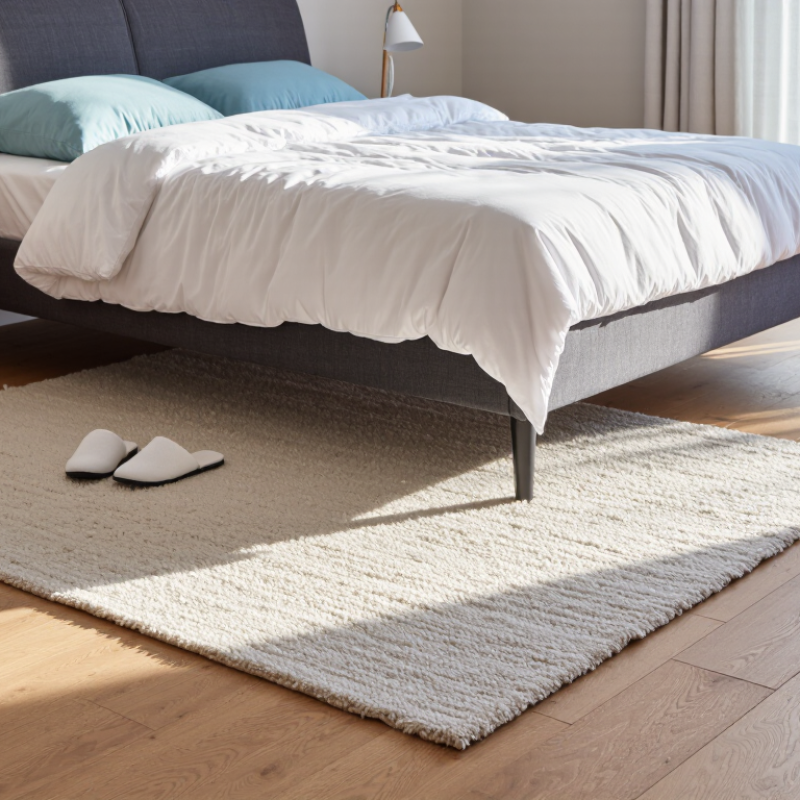
2026 Top Bedside Carpet Types for Global Buyers

In 2026, global buyers are treating the Bedside Carpet as more than a decorative accessory. It affects warmth, walking comfort, noise control, and bedroom safety. The details matter. A soft rug beside a bed can reduce the shock of a cold floor, especially in apartments, hotels, and elderly-care rooms.

Grand View Research reports continued growth in the global carpets and rugs market through 2030, supported by residential renovation, hospitality projects, and changing interior preferences. Mordor Intelligence also identifies durability, easy maintenance, and sustainable materials as important flooring-market trends. These findings suggest stronger demand for washable polypropylene, recycled PET, wool blends, and low-pile designs. However, market reports often combine large area rugs with small bedside products. Their figures should not be treated as perfectly precise for this category.

Material selection remains practical. Wool offers natural resilience and a warmer hand feel, while polypropylene handles stains and frequent cleaning well. Recycled polyester can support sustainability goals, but buyers should verify fiber content and supplier documentation. A low-pile Bedside Carpet is usually easier to vacuum and less likely to catch slippers than a thick shag style. Anti-slip backing also deserves close attention. The ISO 105-X12 standard can help evaluate color fastness during rubbing, while supplier testing should address shedding, odor, and dimensional stability.

No ranking fits every buyer. Humid regions may prioritize quick drying, while cold climates may prefer dense wool construction. Some performance claims remain difficult to compare across countries. This guide examines the leading Bedside Carpet types for global purchasing decisions, balancing comfort, compliance, appearance, lifecycle cost, and realistic supplier evidence.

2026 Top Bedside Carpet Types for Global Buyers

Define 2026 Bedside Carpets by EN 1307 Residential Classes 21–23

2026 Top Bedside Carpet Types for Global Buyers

EN 1307 Residential Classes 21–23 offer a practical way to compare bedside carpets. Class 21 suits bedrooms with moderate foot traffic. Class 22 supports regular household use. Class 23 is designed for heavy domestic traffic and demanding routines.

A bedside carpet faces repeated steps, chair legs, vacuuming, and occasional spills. Class 21 may work beside a rarely used guest bed. Class 22 is a safer choice for a main bedroom. Class 23 can suit family homes where the carpet receives frequent daily contact. However, classification does not measure softness, warmth, color appeal, or every safety feature. Small details matter.

Check the supplier’s EN 1307 declaration and technical file. Confirm the stated use class, fiber composition, backing, pile height, and cleaning guidance. A low pile can make opening doors easier and reduce trapped dust near the bed. A stable backing helps limit curling, but it does not replace a suitable floor surface. Also request information on colorfastness and dimensional stability. Different markets may use different labeling habits, so translated sales claims deserve careful review. A rating is not a promise of perfect performance. Real rooms contain moisture, rolling furniture, and rushed cleaning. That is where a seemingly ideal carpet may disappoint.

2026 Top Bedside Carpet Types for Global Buyers - Define 2026 Bedside Carpets by EN 1307 Residential Classes 21–23

The table below compares common bedside carpet constructions and their suitability for residential use under EN 1307 classification principles. Class 21 indicates moderate domestic use, Class 22 general domestic use, Class 22+ general heavy domestic use, and Class 23 heavy domestic use. The final classification must be confirmed by the relevant product test documentation.

Bedside Carpet Type Typical Construction Common Fibre Options Recommended Residential Class Best-Fit Bedroom Location Performance Profile Maintenance Profile Buyer Considerations
Low-Pile Tufted Carpet Cut pile or loop pile, usually latex-backed or textile-backed Polyamide, polypropylene, polyester, or wool blends 21–23, depending on construction Beside the bed, foot of the bed, and larger bedroom zones Balanced comfort and durability; low pile reduces snagging and makes furniture placement easier Regular vacuuming; spot cleaning according to fibre and backing instructions A versatile choice for global residential projects; request abrasion, castor-chair, fire, and slip information where relevant
Needle-Punched Carpet Mechanically entangled nonwoven fibres, commonly supplied with a stabilising backing Polypropylene or recycled polyester Usually 21–22 Temporary bedrooms, rental housing, guest rooms, and light-use bedside areas Lightweight, economical, and dimensionally stable; generally less plush than tufted or woven carpets Easy routine vacuuming; replace when surface wear becomes visible Check edge stability, backing odour, dimensional stability, and declared recycled content
Flat-Woven Carpet Woven surface with little or no pile; may be reversible depending on design Wool, polypropylene, polyester, cotton, or blended yarns 21–23, subject to tested construction Under or alongside beds where doors and furniture require low clearance Low profile, easy door clearance, and good visual definition; less cushioning underfoot Vacuum with care; avoid aggressive brushing on loose or delicate yarn structures Confirm dimensional stability, colourfastness, and whether a separate anti-slip underlay is required
Wool Loop-Pile Carpet Woven or tufted loop pile with a dense, textured surface Wool or wool-rich blends 22–23 when tested for the intended use Premium bedrooms and family bedrooms with regular daily traffic Naturally resilient, warm, and comfortable; loop construction can show pulls from sharp objects or pet claws Frequent low-suction vacuuming; treat spills promptly and use wool-compatible products Ask for responsible-fibre documentation, colourfastness data, moth-resistance treatment details, and care instructions
Cut-Pile Plush Carpet Dense cut pile with a soft, upright surface Polyamide, polyester, wool, or blended yarns 21–22; 23 requires suitable density and test evidence Personal bedrooms and comfort-focused bedside areas High softness and thermal comfort; shading, tracking, and compression may be more visible Vacuum in multiple directions; rotate loose rugs to distribute wear where practical Evaluate pile recovery, furniture indentation, shedding, and compatibility with robotic vacuums
Shag or High-Pile Carpet Long cut pile or looped yarns with a deep surface profile Polyester, polypropylene, wool, or mixed fibres Typically 21–22; verify carefully before specifying 23 Low-traffic decorative bedside zones with sufficient clearance Very soft and visually striking; more difficult to clean and more prone to flattening Use a vacuum suitable for long pile; inspect regularly for trapped dust and yarn distortion Confirm pile height, fire performance, edge finish, trip risk, and cleaning method for the destination market
Printed or Patterned Carpet Tufted or woven base with a printed, solution-dyed, or pattern-forming surface Polyamide, polyester, polypropylene, wool, or blends 21–23, based on the complete tested product Design-led bedrooms, hospitality-style interiors, and children’s rooms Patterns can disguise minor marks and traffic lanes; colour durability depends on fibre and dye system Follow the declared cleaning method; test stain-removal products on an inconspicuous area Request lightfastness, wet and dry rubbing, stain-resistance, and colour-matching information
Modular Carpet Tiles Small carpet modules, commonly tufted, with bitumen, PVC, polyurethane, or textile backing Polyamide, polypropylene, polyester, or recycled-content blends 22–23 when the complete system is appropriately tested Large bedrooms, serviced apartments, student housing, and replaceable floor zones Localised replacement, design flexibility, and efficient installation; seams may be visible if poorly fitted Replace individual damaged modules; vacuum regularly and follow adhesive or installation guidance Confirm tile dimensions, backing compatibility, installation method, seam appearance, and end-of-life recovery options
Recycled-Fibre Carpet Tufted, woven, or needle-punched construction using recycled or partially recycled inputs Recycled polyester, recycled polypropylene, recycled polyamide, or reclaimed wool 21–23; classification depends on performance, not recycled content alone Eco-conscious bedrooms, residential developments, and procurement projects with material targets Performance can match conventional products when fibre quality, density, backing, and construction are suitable Use the same care routine specified for the construction and fibre type Verify recycled-content claims, chain-of-custody evidence, emissions data, durability tests, and recyclability claims
Class 21
Moderate domestic use; suitable for bedrooms and other lightly used residential areas.
Class 22
General domestic use; suitable for regularly used bedrooms and living areas.
Class 22+
General heavy domestic use; suitable for more active residential circulation.
Class 23
Heavy domestic use; intended for residential areas exposed to higher traffic.

Note: EN 1307 classification is assigned to the complete floor-covering product and should not be inferred from fibre type, pile height, or appearance alone. For international purchasing, also check local requirements for fire reaction, slip resistance, indoor-air emissions, colourfastness, dimensions, backing, and installation.

Compare Wool, Nylon, PET and PP by Abrasion and Moisture Data

2026 Top Bedside Carpet Types for Global Buyers
Compare Wool, Nylon, PET and PP by Abrasion and Moisture Data

Bedside carpet faces concentrated wear from footsteps, bed casters, and nightstand legs. A practical comparison starts with abrasion, not appearance.

Indicative Martindale screening often places nylon above 50,000 cycles, while wool commonly reaches 20,000–50,000 cycles. PET may achieve 30,000–60,000 cycles, and PP often falls near 20,000–40,000 cycles. These figures vary sharply with yarn twist, pile density, backing, and test pressure.

Moisture changes the decision.

Wool
Wool typically has a moisture regain of about 14–18%, so it can buffer humidity but dry slowly after a 500 ml spill.
Nylon
Nylon absorbs roughly 3.5–4.5%, offering moderate drying performance.
PET
PET absorbs below 0.5%, while PP is nearly non-absorbent.
PP
PET and PP therefore resist water-based staining more easily, but liquid can still travel through seams and backing.
A water-resistant fiber is not a waterproof carpet.

For high-traffic bedside zones, dense nylon is often the safer performance choice. PET suits rooms where spill resistance and color stability matter. PP can work in budget-focused spaces with controlled foot traffic. Wool provides a warm hand and natural resilience, yet it demands faster spill response.

Field checks
Field checks should include edge fraying, crushed pile, and damp backing after cleaning.

I would not select fiber from abrasion data alone. Test methods are not perfectly interchangeable, and some published figures look better than real hotel use. A small installed sample can reveal more than a polished specification sheet.

Rank Cut-Pile, Loop-Pile, Flatweave and Tufted Constructions

2026 Top Bedside Carpet Types for Global Buyers

For bedside use, cut-pile ranks first for softness, warmth, and quiet footfall. Its sheared yarn ends create a dense, cushion-like surface. A 2024 Grand View Research report valued the global carpet and rugs market at about US$72.39 billion in 2023, showing strong demand for comfort-led flooring. In hotel rooms and bedrooms, cut-pile works well beside beds, especially in cooler climates. However, it can show footprints and flattened areas. I would not oversell its easy-care performance.

Loop-pile ranks second for durability and visual stability. Its uncut yarn loops resist crushing better under luggage wheels and repeated walking. The Carpet and Rug Institute advises regular vacuuming to control abrasive soil, which matters near bedroom entrances. Flatweave ranks third for thinness and portability. It slides more easily beneath doors and suits warmer regions, but offers less cushioning on hard floors. Small fibers and dust may also remain visible between tight woven structures.

Tufted construction ranks fourth as a purchasing category, although this ranking needs correction. Tufted carpets may use either cut or loop pile, so construction and surface style overlap. The International Organization for Standardization describes these terms separately in ISO 2424. Buyers should check pile type, backing, edge binding, and cleaning instructions together. A 60-by-90-centimeter sample can reveal shedding, odor, color shift, and whether the corners curl after unpacking. Real rooms are less forgiving than catalogs.

Select 60×90 to 80×150 cm Sizes Using Layout and Shipping Metrics

2026 Top Bedside Carpet Types for Global Buyers

For global buyers, bedside carpet selection starts with the bed footprint, not a trend chart. A 60×90 cm mat fits beside a narrow single bed or a compact guest room. It leaves a clean walking strip and reduces door interference. Choose a low-pile flatweave for frequent cleaning and easier trolley movement. Short pile works well.

An 80×150 cm runner-style carpet suits larger beds and shared bedside zones. Place its long edge parallel to the bed, with 20–30 cm extending beyond the nightstand. For cold floors, dense tufted or wool-blend surfaces add warmth, but they increase packed weight. On humid routes, tightly bound edges and moisture-resistant packaging deserve more attention than decorative fringe. That detail matters. Measure the clearance twice.

Shipping should be checked beside the room plan. Compare net product weight, rolled diameter, carton dimensions, and dimensional weight before ordering. A larger carpet may look efficient, yet its carton can trigger a higher freight tier. Ask the supplier for packed measurements, stackability, and protection against compression. For mixed containers, consistent sizes simplify pallet planning and reduce empty gaps. Still, I would not choose the smallest mat automatically. A 60×90 cm option can feel visually lost beside a wide bed. Test the layout with paper on the floor first; my own estimates have been wrong when furniture spacing changed.

Check ISO 2424, ASTM D2859, EN 13501-1 and VOC Compliance

2026 Top Bedside Carpet Types for Global Buyers

Bedside carpets in 2026 need more than soft texture and attractive colors. Global buyers should check construction, fiber content, backing, and test documentation before approval. Cut-pile carpets feel comfortable under bare feet, while low-loop styles resist crushing beside busy beds. Recycled fibers can support sustainability goals, but their VOC performance still requires evidence.

ISO 2424 provides common terminology for textile floor coverings. This matters when suppliers describe pile height, backing, or carpet structure differently. It does not replace safety testing. ASTM D2859 evaluates the flammability of finished textile floor coverings under a specific ignition method. Ask for the test report, laboratory details, product code, and tested construction. A small backing change may invalidate an old report.

EN 13501-1 classifies reaction to fire for construction products, including floor coverings where applicable. Request the exact classification and application conditions, not only a vague “fire resistant” claim. VOC compliance also deserves attention in bedrooms. Ask for chamber-test results, detected substances, testing duration, and the required market threshold. A faint chemical smell is not proof of non-compliance, but it should trigger investigation. Product samples should be opened indoors and observed after 24 to 72 hours. This practical check is useful, although it cannot replace laboratory data. Certificates may look complete. Sometimes they cover only a similar model, not the supplied carpet.

Scroll to Top