
Top 10 Insulated Combination Pliers for Professionals

Choosing Insulated Combination Pliers is not just a matter of grip or price. In a crowded tool market, dependable insulation, precise jaws, and comfortable handles matter during repetitive electrical work. Grand View Research estimated the global hand tools market at USD 25.5 billion in 2023, reflecting the scale of a category where professional buyers have many options. That figure covers hand tools broadly, not insulated pliers alone. The distinction matters.

Safety standards offer a more direct benchmark. IEC 60900 covers insulated hand tools designed for work on or near live parts, with ratings commonly marked up to 1,000 V AC and 1,500 V DC. A voltage marking is not permission to ignore safe-work procedures. Inspect the insulation for cuts, cracks, or wear, and check that the jaws meet cleanly. Small details count. A loose pivot can become frustrating by midday.

Electrical educator Mike Holt is often associated with the reminder, “Safety is not expensive, it’s priceless.” It is a general safety principle, not a product-specific endorsement. This guide compares ten professional options by insulation credentials, build quality, cutting performance, ergonomics, and practical value. A pair may look excellent on a shelf yet feel awkward in a cramped panel. That is worth questioning. The best choice is the one whose ratings can be verified and whose design suits the actual task.
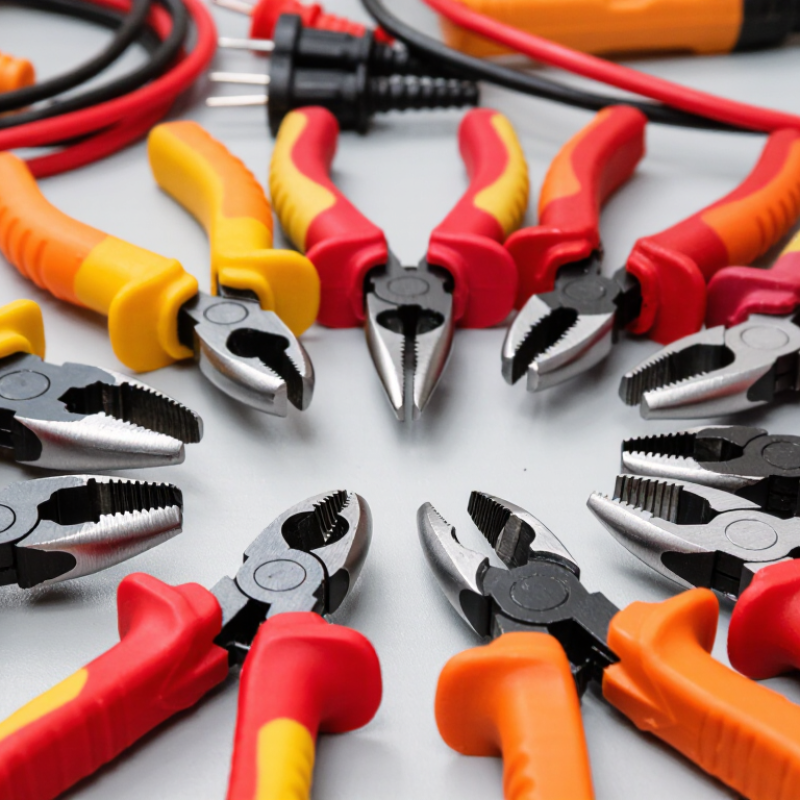
Top 10 Insulated Combination Pliers for Professionals

What Insulated Combination Pliers Are and How They Protect Users

Insulated combination pliers combine gripping jaws, a pivot, and cutting edges in one hand tool. Professionals use them to hold wire, bend conductors, and cut suitable materials. Insulating layers cover the handles, with raised stops near the jaws to help keep hands from sliding forward. This barrier can reduce the risk of accidental contact with live parts, but it does not make energized work safe by itself. Check the tool’s voltage rating and markings before use.

A nick, crack, or patch of grime can compromise the handle’s protection. Look closely near the jaw end and around the pivot, where wear may be easy to miss. I find it tempting to judge pliers by their jaws alone; that is an incomplete check. Insulated tools should be used alongside proper procedures and suitable protective equipment. When the work can be de-energized, do so and verify it before handling conductors.

Tips: Wipe the handles clean and inspect them before each use. Don’t use pliers with damaged insulation. Keep fingers behind the raised stops, and avoid using the cutting edges on materials beyond the tool’s stated capacity. Not foolproof. A careful inspection takes seconds, but it cannot replace sound electrical safety practices.

Top 10 Insulated Combination Pliers for Professionals

What Insulated Combination Pliers Are and How They Protect Users

Insulated combination pliers are designed for electrical work and have protective insulation on their handles. IEC 60900-rated insulated tools are intended for use up to 1,000 V AC or 1,500 V DC. Insulation can reduce shock risk, but it does not replace safe work procedures, suitable protective equipment, or de-energizing circuits when possible.

How Insulation Ratings and Safety Standards Are Defined

Insulation ratings describe a tool’s tested protection, not permission to work carelessly. Standards such as IEC 60900 cover insulated hand tools intended for work on or near live parts. Tools within this standard are commonly marked for use up to 1,000 volts AC or 1,500 volts DC. The rating is not the test voltage; laboratory testing applies more demanding conditions to check insulation integrity. Check the markings and documentation, rather than judging protection by handle color or thickness. That matters.

Combination pliers should have insulation covering the handles fully, with no exposed metal where a hand may rest. Before use, look for cuts, cracks, swelling, or loose end caps, especially near the joint and handle edges. Small defects count. Even careful users can overlook a fine split after the tool has been stored with other equipment. A voltage rating also does not protect against every hazard, such as damaged conductors, moisture, or poor work practices. Follow workplace procedures, use suitable protective equipment, and remove questionable tools from service. The label is useful, but easy to overtrust. A quick inspection cannot replace formal testing or training.

Key Features to Compare Before Choosing a Professional Pair

A professional pair should be judged by more than its voltage rating. Check the insulation markings and product documentation, and confirm the stated rating suits the work. The handles should cover the gripping areas without gaps, cuts, or loose material. Inspect the whole tool. Insulation is not a substitute for safe work practices or regular checks.

Next, compare jaw shape, cutting edges, and joint movement. A narrow nose can reach crowded terminals, while broader jaws may grip wire more securely. Open and close the pliers several times; movement should feel smooth, not gritty or stiff. The cutters should meet cleanly across their edges. Try the grip with work gloves, since a handle that feels comfortable bare-handed may become awkward with gloves.

Weight and balance matter over a full shift. A pair that feels light in the shop can still strain the wrist during repeated cuts. I can overlook handle texture when comparing specifications, but it becomes obvious on a damp day. That is worth checking. Also consider cleaning and inspection: dirt can hide cracks or wear. No single feature makes a tool right for every job, so compare it against the wire sizes, access limits, and routine use you actually face.

Top 10 Insulated Combination Pliers for Professionals

For professionals comparing the top 10 insulated combination pliers, start with the work, not the ranking. A narrow head can reach crowded control cabinets, while broad jaws grip larger conductors more securely. Check the cutting edge, pivot smoothness, and handle shape; after a long shift, a small pressure point can become a real distraction. Fit matters.

Safety markings deserve close attention. IEC 60900 covers insulated hand tools for work on live parts up to 1,000 volts AC, and ASTM F1505 sets requirements for insulated tools. These standards help buyers compare tested products, but they do not make energized work risk-free. The U.S. Bureau of Labor Statistics recorded 145 fatal occupational injuries from exposure to electricity in 2022. That figure is a sobering reminder to follow site procedures and de-energize equipment whenever possible.

A practical top-ten shortlist should weigh insulation condition, jaw alignment, cutting performance, and clear voltage markings—not just comfort or price. Inspect handles for cuts, swelling, or exposed material before use, and remove damaged tools from service. A plier that feels excellent in the hand may still be wrong for a tight cabinet. I would also leave room for judgment: no ranking can replace checking the actual task, clearance, and tool condition.

How to Select and Maintain the Right Pliers for the Job

Choosing insulated combination pliers starts with the job, not the handle color. Check the marked insulation rating and confirm it matches the task requirements. Insulation must be intact across the handles, with no cuts, cracks, swelling, or exposed metal. Fit matters too. The jaws should meet evenly, and the grip should feel steady without forcing your wrist into an awkward angle. Combination jaws handle gripping and cutting, but frequent heavy cutting may call for a more suitable tool. A soft grip can feel reassuring. It is not proof of protection. Even correctly rated pliers do not make energized work safe; follow workplace procedures and use qualified personnel.

Maintenance takes little time, but it is easy to skip. Wipe the tool dry after use, especially if dust or moisture has collected around the pivot. Open and close the jaws to check for looseness, sticking, or uneven movement. Add a small amount of suitable lubricant to the joint, then remove excess oil from the gripping surfaces. Store the pliers where sharp edges cannot nick the insulation. Do not cover damage with tape or keep using a questionable tool. Replace it or have it assessed according to workplace guidance. I would check the markings again after a rough day in a crowded tool bag; wear can be subtle. Small details matter.

Top 10 Insulated Combination Pliers for Professionals - How to Select and Maintain the Right Pliers for the Job

This is a practical selection guide, not a laboratory ranking of specific products. Choose pliers by the task, access, hand fit and verified safety markings; actual dimensions and features vary by tool.

Rank Selection Profile Typical Design or Size Best Suited For What to Check Before Buying Care and Maintenance
1 General-purpose combination pliers Standard-length design with gripping jaws, a pipe-gripping section and a cutting edge. Everyday electrical installation and maintenance tasks involving gripping, bending and cutting suitable wire. Confirm the tool is explicitly marked as insulated and carries the applicable standard markings. Check that the jaws align and the pivot moves smoothly. Wipe clean and dry after use. Inspect the insulated handles before each use for cuts, cracks, swelling or exposed metal.
2 Compact insulated combination pliers Shorter overall length and smaller gripping area than a full-size general-purpose pattern. Work in confined enclosures or where a smaller tool is easier to control. Check that the jaw opening and handle clearance suit the work. A compact tool may provide less leverage than a longer one. Keep the joint free of dirt and grit. Do not force the tool beyond its intended cutting or gripping capacity.
3 Longer-reach combination pliers Longer handles or jaws than a compact pattern; available dimensions differ by manufacturer and model. Tasks requiring greater reach or leverage when the surrounding space allows a larger tool. Assess access, balance and grip comfort. More leverage does not make the tool suitable for cutting materials outside its rated capacity. Check the pivot and cutting edges for looseness, chips or damage. Keep the tool dry and store it away from sharp objects.
4 High-leverage combination pliers Pivot geometry designed to increase cutting or gripping leverage compared with a conventional pattern. Repeated cutting or gripping tasks where reduced hand effort is useful. Compare the stated cutting capacity with the wire or material involved. Confirm that the jaws close evenly and the handles remain comfortable. Use only on materials within the tool’s stated capacity. Remove from service if the pivot loosens or the cutting edges become damaged.
5 Combination pliers with serrated gripping jaws Textured inner jaw faces intended to improve purchase on workpieces. Holding and bending suitable conductors or small components where a firmer grip is needed. Check that the jaw pattern grips without obstructing the task. Avoid using the jaws on surfaces that must remain unmarred. Brush debris from the jaw teeth and wipe off residue. Do not grind or reshape the jaws, as this can affect the tool.
6 Combination pliers with integrated wire cutter Cutting edges near the pivot, combined with gripping jaws; capacities vary by design. General electrical work where gripping and cutting functions are both required. Verify the specified cutting capacity and intended material. Do not assume the cutter is suitable for hardened wire, nails or cable without explicit confirmation. Keep cutting edges clean and inspect for nicks or separation. Never use the cutter as a substitute for a tool designed for a different material.
7 Slim-profile insulated combination pliers Narrower head or handle profile than a standard pattern, while retaining combination-plier functions. Work in restricted spaces where a standard-width head cannot be positioned easily. Check that the narrower jaws still provide adequate grip and that the insulation does not prevent access to the work area. Inspect the insulation closely around the head and handle transitions, where damage can be harder to notice.
8 Comfort-grip insulated combination pliers Handles shaped or surfaced to improve comfort and control; handle construction varies. Frequent hand-tool use where fit and control are important. Try the grip if possible. Confirm the handles are part of the tool’s certified insulation system; a soft or cushioned covering alone is not proof of electrical insulation. Clean with a method compatible with the handle material. Do not use solvents or abrasive cleaners unless the tool instructions permit them.
9 Combination pliers for frequent professional use Choose a robust pattern with clearly stated material, cutting capacity and insulation-standard information. Regular installation, service or workshop work where consistent performance and inspection are essential. Review the manufacturer’s specifications, applicable standard, intended voltage rating and inspection instructions; do not rely on appearance alone. Establish a routine inspection schedule. Keep tools identifiable and separate damaged or questionable tools from serviceable ones.
10 Task-matched insulated combination pliers Select the jaw shape, overall size and handle form to suit the actual work rather than choosing by size alone. Specialized maintenance tasks where access, workpiece shape or frequency makes a particular pattern preferable. Check that combination pliers are the correct tool for the job. Use a dedicated cutter or another tool when the task exceeds the pliers’ stated capability. Follow the tool instructions for cleaning, storage and inspection. Replace the tool if its insulation is damaged or its mechanical action is defective.

Safety note: IEC 60900 covers insulated hand tools for work on live parts up to 1,000 V AC and 1,500 V DC. Verify the markings and rating on the individual tool, and follow applicable workplace procedures. Use insulated tools only when authorized and trained; de-energize equipment whenever practicable. Never use a tool with damaged insulation.

Scroll to Top