10 Essential Tips for Choosing the Right Cosmetic Manufacturers?
Choosing the right cosmetic manufacturers is crucial for your business. The quality of your products directly affects your brand’s reputation. A poor choice can lead to subpar items that don't meet customer expectations.
Think about your specific needs. Are you focusing on skincare, makeup, or another niche? Different manufacturers specialize in various areas. Consider their experience and expertise. A new manufacturer may offer lower prices, but they might lack reliability.
Do your research thoroughly. Read reviews and ask for references. Look for manufacturers with a good track record. Quality control should be a priority. Check if they follow industry standards to ensure safety and effectiveness. Your choice will impact customer satisfaction and loyalty, so take the time to reflect.
Understanding the Cosmetic Manufacturing Industry and Standards
Choosing the right cosmetic manufacturer requires a deep understanding of industry standards. In 2021, the global cosmetic manufacturing market was valued at around $42 billion. This shows significant growth potential, with a projected annual increase of 7.14% through 2028. However, not every manufacturer meets the same quality standards.
Quality assurance is key. Brands must ensure their manufacturers adhere to Good Manufacturing Practices (GMP). These practices are critical for safety and efficacy. For example, more than 30% of recalls in cosmetics are due to contamination risks. It highlights why selecting a manufacturer with a solid quality control process is essential. Manufacturers should provide transparency in sourcing and ingredient testing.
Additionally, regulatory compliance plays a huge role. In the U.S., the FDA does not approve cosmetics before they hit the market. It places the onus on brands to ensure compliance. Yet, a staggering 50% of companies fail to meet labeling standards. This can lead to costly penalties and damaged reputations. Therefore, evaluating a manufacturer's regulatory history is vital. Taking shortcuts in this research can create significant pitfalls.
10 Essential Tips for Choosing the Right Cosmetic Manufacturers
| Tip Number |
Tip Description |
Key Considerations |
Industry Standards |
| 1 |
Research Potential Manufacturers |
Check their reputation and reviews |
ISO certifications |
| 2 |
Evaluate Manufacturing Capabilities |
Assess their production scale and technology |
Good Manufacturing Practices (GMP) |
| 3 |
Confirm Product Quality Standards |
Review testing processes and certifications |
FDA compliance |
| 4 |
Assess Communication Skills |
Evaluate responsiveness and language proficiency |
ISO 9001 |
| 5 |
Check for Sustainable Practices |
Inquire about eco-friendly materials and practices |
Cosmetic Sustainability Standards |
| 6 |
Understand Pricing Structures |
Compare quotes and hidden costs |
Price Benchmarks in the Industry |
| 7 |
Review Sample Products |
Request samples before placing bulk orders |
Quality Assurance Standards |
| 8 |
Consider Location |
Shipping times and costs from their location |
Logistics Industry Standards |
| 9 |
Check for Innovation |
Assess their R&D capabilities |
Innovation Quality Standards |
| 10 |
Establish Clear Contracts |
Ensure clear terms and conditions |
Contractual Compliance Norms |
Identifying Your Specific Cosmetic Product Needs and Requirements
Choosing the right cosmetic manufacturer begins with understanding your specific product needs and requirements. The global cosmetics market is projected to reach over $800 billion by 2025, according to a report by Grand View Research. This emphasizes the importance of identifying unique standards for your product. Are you focusing on skincare, makeup, or hair care? Each of these categories has distinct formulation requirements.
Start by assessing your target audience. What do they expect? Are they looking for vegan options, or perhaps cruelty-free products? Recent data indicates that over 50% of consumers prefer eco-friendly formulations. It's critical to embrace these trends while aligning with your brand values. Not every manufacturer specializes in sustainable products, leading to mismatched partnerships.
Precision in details can define the success of your cosmetic line. Consider packaging, texture, and scent. Some manufacturers may not offer the flexibility you require. The ideal partner should not only meet your standards but also strive for innovation. However, maintaining quality can be challenging. Manufacturers may promise high standards but struggle with consistency. Regular communication and evaluations can help mitigate these issues.
Assessing Manufacturer Certifications and Quality Assurance Processes
Choosing the right cosmetic manufacturer means assessing various factors, especially certifications and quality assurance processes. A reliable manufacturer should have certifications like ISO 9001 or GMP. These certifications indicate adherence to global quality standards. Reports show that about 70% of consumers consider product quality as their top priority. Thus, ensuring your manufacturer meets these standards is crucial.
When evaluating a manufacturer, ask about their quality assurance processes. How do they monitor ingredient sourcing? What testing do they perform on final products? Delve into their methodology. If they can't provide clear answers, it may be a red flag. Many companies claim high standards but lack transparency, which is concerning.
Look for manufacturers willing to share their testing results. Their willingness speaks volumes about their commitment to quality. Also, consider third-party testing. In a report, businesses that employ third-party testing see a reduction in product recalls by up to 40%. This can significantly enhance brand reputation. If a manufacturer seems hesitant about these practices, reflect on whether they align with your standards.
Quality Assurance Assessments of Cosmetic Manufacturers
Evaluating Manufacturer Experience and Reputation in the Market
When evaluating cosmetic manufacturers, experience and reputation are paramount. A study by Market Research Future indicates that the global cosmetic market is expected to reach $429.8 billion by 2022. Many manufacturers are competing for attention. Consequently, a solid reputation is essential.
Tip: Look for manufacturers with years of experience. A company that has been in the industry for over a decade often displays stability. However, newer manufacturers can also be innovative. They may introduce fresh ideas that resonate with today’s consumers.
Checking online reviews can reveal a lot about a manufacturer’s reliability. Surveys show that 72% of consumers trust online reviews as much as personal recommendations. This statistic underscores the importance of reputation. Some manufacturers may have stellar products but lack the experience needed to execute a successful launch.
Tip: Evaluate industry certifications. A manufacturer with ISO certifications likely adheres to quality standards. However, certification alone doesn’t guarantee success. Efforts to engage with manufacturers personally can uncover their dedication to customer service. Explore their response times and willingness to adapt to your needs versus their own.
Establishing Clear Communication and Collaboration with Potential Partners
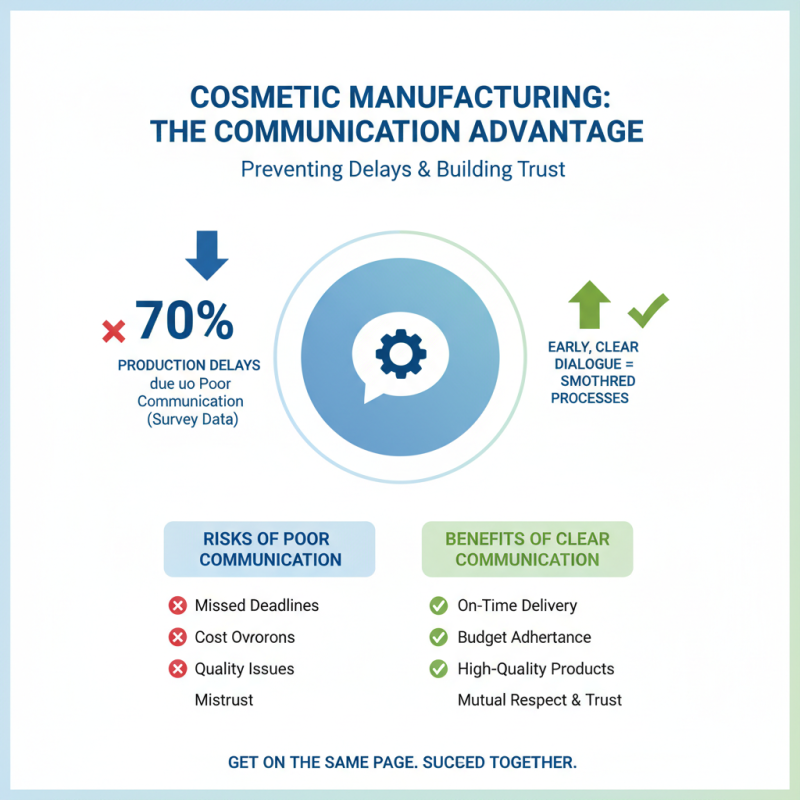
Establishing clear communication with cosmetic manufacturers is vital. A recent survey revealed that 70% of delays in production stem from poor communication. Getting on the same page early on can prevent major setbacks. Clear dialogue helps both parties understand expectations. It sets a foundation for mutual respect and trust.
When discussing your vision, be specific. Use visual references, samples, and detailed descriptions. This minimizes misunderstandings. A report from the Cosmetic Industry Association noted that firms with strong collaboration experience 30% fewer errors. However, many brands often overlook the importance of asking for feedback. Regular check-ins can highlight emerging issues. It’s important to foster an environment where all parties feel comfortable voicing concerns.
Remember, not all communication will go smoothly. Misunderstandings are common and can lead to frustration. Acknowledging mistakes is part of the process. Transparency can help alleviate tensions. It is crucial to remain open to adjustments, as flexibility enhances collaboration. Mistakes can sometimes lead to innovative solutions when addressed properly.