How to Choose the Best Private Label Manufacturers for Your Business?
Choosing the right private label manufacturers is crucial for business success. In a rapidly growing market, over 25% of consumers prefer private label products. This trend shows the potential for brand owners to build their own labels. By partnering with reliable private label manufacturers, businesses can leverage quality and cost advantages.
However, not all manufacturers deliver the same value. Research indicates that nearly 30% of brands experience dissatisfaction with their manufacturing partners. Businesses must assess quality, pricing, and production capabilities carefully. Choosing a manufacturer with a strong reputation can enhance product quality and branding.
Building a successful relationship with private label manufacturers requires due diligence. Understand their production processes and supply chain. Visit the factory if possible. Explore certifications and compliance documents. Many brands overlook these factors. A thoughtful approach can mitigate risks associated with poor-quality products.

Identify Your Business Needs and Product Specifications
Identifying business needs and product specifications is essential when selecting private label manufacturers. Start by clearly defining your target market. Who are your customers? What do they expect? Consider their age, preferences, and lifestyle. These factors will guide your product development.
Next, outline specific product characteristics. Is it organic or gluten-free? Should it be eco-friendly? Make a list of essential features. The more detailed you are, the easier it will be to find manufacturers who align with your vision. Keep in mind that not all manufacturers fit every requirement. Some may excel in quality, while others focus on cost. This might lead to compromises; reflect on what truly matters to you.
Finally, consider testing different manufacturers through small runs. Sometimes, a promising option may fall short during production. Familiarizing yourself with the manufacturing process can reveal hidden challenges. Pursue clear communication throughout. A mutual understanding helps establish a stronger partnership. Reassess your needs regularly as your business evolves. This adaptability will keep you aligned with your market and ensure ongoing success.
Research Potential Private Label Manufacturers
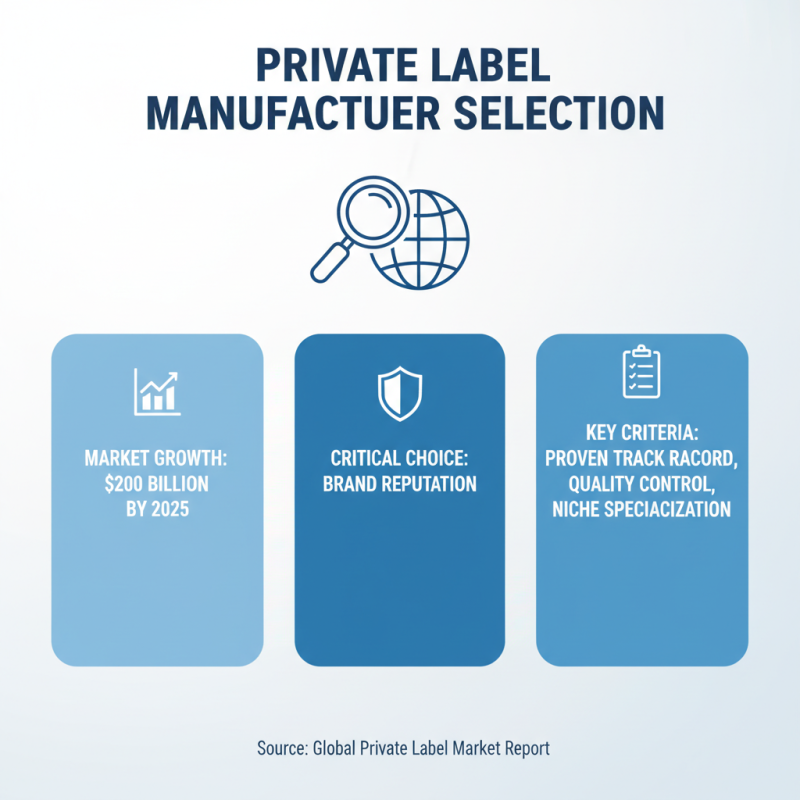
When exploring potential private label manufacturers, thorough research is essential. The global private label market is projected to reach $200 billion by 2025, indicating significant growth opportunities. This makes your choice of manufacturer even more critical. Start by compiling a list of manufacturers with a proven track record in your niche. Look for those who specialize in quality control, as this can significantly impact your brand's reputation.
Quality reports are often overlooked. A survey by the Private Label Manufacturers Association found that 67% of consumers trust private label brands as much as national brands when quality is on par. Request product samples and inspect them meticulously. Realize that not all manufacturers maintain consistent quality. Some might produce excellent items in one batch and fail in the next. Be wary of this inconsistency.
Also, consider the manufacturer’s flexibility. If they cannot accommodate your needs in terms of minimum order quantities or custom formulations, rethink your choice. Remember that communication is vital. A manufacturer should respond promptly to inquiries. If they don’t, it raises red flags. Reflect on these factors carefully. Choosing a partner for your brand is not just about cost; it's about quality and reliability.
Evaluate Manufacturers’ Capabilities and Expertise
When selecting private label manufacturers, evaluating their capabilities and expertise is crucial. A report from IBISWorld indicates that the private label industry is growing at a rate of 5.5% annually. This growth reflects increasing consumer demand for high-quality, cost-effective products. Start by assessing the manufacturer’s production capacity. Are they able to meet your order volumes consistently? Can they scale as your business grows?
Quality control is another vital factor. Manufacturers should have robust quality assurance processes in place. Look for certifications that indicate adherence to industry standards. For example, ISO certifications are a good sign of reliability. A 2022 survey revealed that 78% of companies experienced product issues due to lack of quality checks.
Tips: Communicate openly with potential manufacturers. Ask for samples to assess product quality firsthand. Don’t hesitate to seek references from previous clients. Understand that not every manufacturer may have all the certifications you desire. Reflect on how that could impact your brand. Always weigh the benefits against potential risks.
Assess Quality Standards and Certification Processes
When selecting private label manufacturers, assessing quality standards is crucial. Begin by examining their certification processes. Manufacturers should comply with international standards like ISO, which ensures consistent product quality. According to a report from Grand View Research, over 70% of consumers prioritize certification when choosing products. If a manufacturer lacks certifications, it raises red flags about their practices.
Quality control measures are equally essential. Manufacturers should have rigorous testing protocols in place. For instance, they may perform batch testing to catch defects before products reach the market. A survey from Statista revealed that 65% of businesses found that inadequate testing led to product recalls. This kind of oversight can damage both reputation and finances.
Don’t overlook inspection reports. They provide insight into the manufacturer's processes. However, not every report reveals the full story. There are cases where reports are outdated or manipulated. It’s vital to seek recent data and verify its authenticity. Even reputable manufacturers can have inconsistencies. Regular audits and feedback loops can help manage these issues effectively.
Understand Pricing Structures and Minimum Order Requirements
When selecting private label manufacturers, it is crucial to understand their pricing structures. Manufacturers may offer tiered pricing based on order volumes. Higher quantities often lead to lower per-unit costs, but this can be a double-edged sword. If your demand fluctuates, overcommitting to large orders can result in excess inventory. This surplus can tie up capital and space in your warehouse.
Minimum order requirements are another essential aspect. Each manufacturer has different requirements, which can influence your decision. Some may require a minimum of several hundred units, while others operate on a smaller scale. If you’re a new business, high minimums might be daunting. Assessing your capability is vital. Can you handle the inventory? Will it sell? Balance is key here.
Understanding these factors is not straightforward. Prices can be influenced by many elements, including material costs and labor. It’s important to ask questions. Transparency is vital for a good partnership. Always request a detailed breakdown of costs and terms. This helps you find a manufacturer that aligns with your budget and production goals. Keep in mind that the cheapest option isn’t always the best in the long run.