How to Choose the Best Makeup Manufacturers for Your Beauty Brand in 2025
In the ever-evolving beauty industry, the selection of the right makeup manufacturers is crucial for the success of any beauty brand. As we step into 2025, understanding the dynamics of choosing the best partners in the makeup manufacturing sector is more important than ever. Industry expert Sarah Jenkins, a renowned consultant in cosmetic production, emphasizes, "The foundation of a successful beauty brand lies not just in its vision, but in the quality and reliability of its makeup manufacturers."
As consumers become more discerning and trends shift rapidly, beauty brands must navigate a complex landscape filled with numerous options when it comes to sourcing their products. Factors such as sustainability, innovation, and compliance with safety standards are now at the forefront of consumers' minds, making the decision-making process even more intricate. By aligning with the right makeup manufacturers, brands can ensure that they not only meet market demands but also carve out a unique identity in the competitive beauty arena.
Therefore, understanding what to look for in makeup manufacturers in 2025 will empower beauty entrepreneurs to make informed choices that resonate with their target audience while fostering sustainable growth in the industry. By focusing on quality, transparency, and ethical practices, brands can build a strong foundation that supports their long-term vision.

Identifying Your Specific Beauty Product Needs for 2025
Identifying specific beauty product needs in 2025 is crucial for any beauty brand looking to thrive in a competitive market. According to a report by Grand View Research, the global cosmetics market is expected to reach $429.8 billion by 2025, with a significant shift towards clean and sustainable beauty products. Consumers are increasingly prioritizing eco-friendly and cruelty-free options, which means that beauty brands must focus on formulating products that align with these values.
To successfully pinpoint your product needs, begin by conducting thorough market research to understand current trends and consumer preferences. A survey by Statista revealed that 70% of consumers are influenced by eco-certifications when making purchasing decisions. This indicates a growing demand for transparency in ingredient sourcing and manufacturing processes. Furthermore, identifying your target demographic can guide your product formulations—whether you’re targeting Gen Z with bold colors or mature consumers seeking anti-aging benefits, tailoring your product line to meet these varied demands is essential.
Additionally, consider leveraging technology to enhance product development. According to a study by McKinsey, brands that integrate digital innovation in their product design and marketing can increase their market share by 15% within a year. Whether it's utilizing data analytics to predict consumer behavior or adopting AI-driven solutions for personalized product offerings, being technologically savvy could set your brand apart in 2025’s dynamic beauty landscape.
Researching Makeup Manufacturers: Key Factors to Consider
When researching makeup manufacturers for your beauty brand in 2025, several key factors should be carefully considered to ensure a successful partnership. First and foremost, evaluate the manufacturer's production capabilities and technology. This includes understanding the range of products they can create, their quality control processes, and whether they can accommodate various packaging options. A manufacturer with advanced technology will not only enhance product quality but also expedite the production timeline, allowing your brand to meet market demands effectively.
Another important factor is the manufacturer's compliance with industry regulations and ethical practices. Investigate their sourcing of raw materials, adherence to safety standards, and commitment to sustainability. An increasing number of consumers are prioritizing eco-friendly and ethical products, so partnering with a manufacturer that shares these values can bolster your brand's reputation. Additionally, consider the flexibility and responsiveness of the manufacturer in communication and production adjustments. A responsive partner can help you navigate changes in market trends or customer preferences, ensuring that your brand remains competitive in the dynamic beauty industry.
Evaluating Manufacturer Certifications and Quality Standards
When choosing a makeup manufacturer for your beauty brand in 2025, evaluating certifications and quality standards is crucial. Manufacturers in the cosmetics industry are often required to adhere to specific certifications that ensure product safety and efficacy. According to a report by the Cosmetic Industry Association, 70% of global consumers prioritize purchasing products from brands that demonstrate commitment to quality and sustainability. Certifications such as ISO 22716, which focuses on Good Manufacturing Practices (GMP), can serve as a benchmark for quality assurance.
Furthermore, manufacturers with certifications like the Cruelty-Free or Vegan labels are gaining popularity, catering to a growing segment of ethically-conscious consumers.
Tips for evaluating manufacturers include conducting thorough background research and requesting documentation of their certifications. A reliable manufacturer should be able to provide proof of compliance with relevant quality standards. Engaging in audits or site visits can also provide insight into their manufacturing processes and adherence to safety protocols. It's advisable to assess their track record concerning product recalls or safety violations, as these indicators can spotlight potential risks associated with partnership.
Additionally, gathering feedback from other brands who have previously collaborated with potential manufacturers can provide valuable first-hand insights into the quality and reliability of their operations. Always prioritize partnerships that align with both your brand values and the expectations of your target market.
Assessing Manufacturer Reputation and Client Testimonials
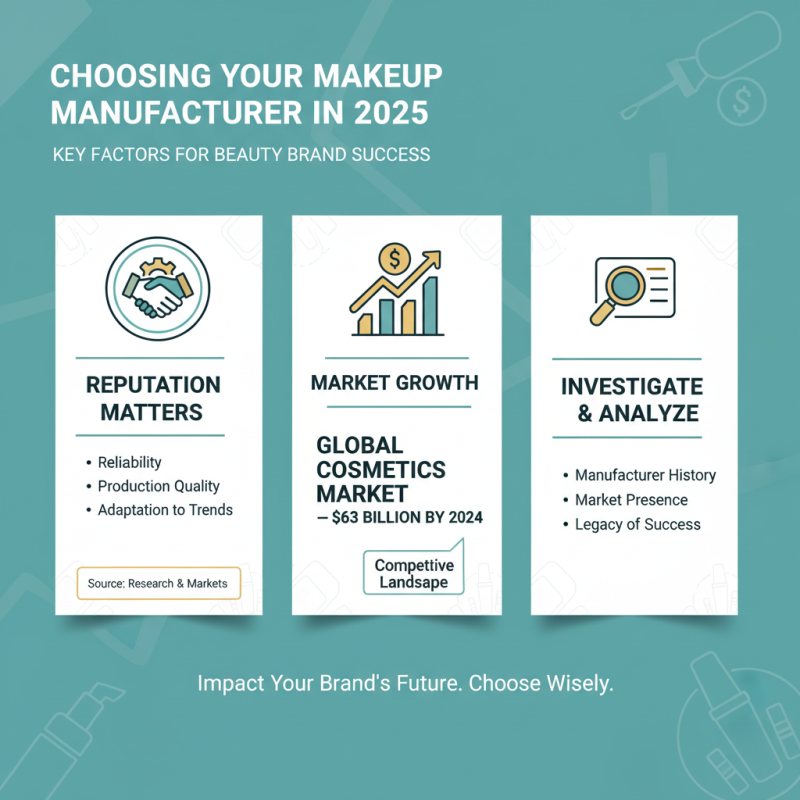
When selecting the ideal makeup manufacturer for your beauty brand in 2025, assessing the reputation of potential partners is crucial. An analysis by the Research and Markets shows that the global cosmetics market is projected to reach approximately $863 billion by 2024, highlighting a competitive landscape where choosing the right manufacturer can significantly impact your brand’s success. To navigate this crowded field, investigate manufacturers' histories and market presence. Established manufacturers often showcase a legacy of reliability, production quality, and the ability to adapt to evolving beauty trends—characteristics that are essential for a burgeoning brand.
Client testimonials serve as another vital resource in your evaluation process. Industry insights indicate that around 79% of consumers trust online reviews as much as personal recommendations, underlining the importance of feedback from previous clients. Scrutinizing testimonials can provide valuable insights into a manufacturer’s professionalism, production capabilities, and customer service. Furthermore, platforms like Trustpilot or social media can offer unfiltered opinions from clients, allowing you to gauge not just the satisfaction levels but also the potential pitfalls associated with each manufacturer. Engaging directly with current clients for detailed discussions can further deepens your understanding, equipping you with the knowledge to make informed decisions that enhance your brand’s image and functionality.
Negotiating Terms and Building Long-Term Partnerships
Negotiating terms and building long-term partnerships with makeup manufacturers is crucial for beauty brands looking to thrive in 2025. A well-structured negotiation can lead to favorable pricing, quality assurance, and exclusive product offerings that serve to differentiate your brand in a competitive market. Research indicates that brands that actively collaborate with their manufacturers and negotiate terms effectively can enhance their profit margins by as much as 20%. This highlights the significance of establishing clear expectations and fostering open communication from the outset.
When discussing terms, focus on aspects such as payment schedules, minimum order quantities, and production timelines. These elements can significantly impact cash flow and inventory management. Additionally, consider including clauses for quality control and potential future collaborations based on performance metrics. Remember that investing time in these discussions can pave the way for a more productive relationship in the long run.
Tips for successful negotiations include understanding the manufacturer's capabilities and leveraging market trends to your advantage. For instance, the global cosmetics market is projected to grow at a CAGR of 4.75% through 2025, presenting a prime opportunity for brands that tap into emerging trends like sustainability and inclusivity in product offerings. Conducting thorough market research and staying informed on industry data can empower your negotiations and strengthen your position as a partner rather than just a client.
How to Choose the Best Makeup Manufacturers for Your Beauty Brand in 2025 - Negotiating Terms and Building Long-Term Partnerships
| Manufacturer Type |
Production Capacity (units/month) |
Minimum Order Quantity (units) |
Lead Time (weeks) |
Certifications |
Payment Terms |
| Private Label |
100,000 |
500 |
4 |
ISO, GMP |
50% upfront, 50% before shipment |
| Custom Formulation |
50,000 |
1,000 |
6 |
OEM, cruelty-free |
30% upfront, 70% upon delivery |
| Contract Manufacturing |
200,000 |
2,000 |
8 |
FDA registered, organic |
40% upfront, net 30 days |