
China Top 10 Cat Antiseptic Wipes Manufacturers 2026?

Choosing among China’s top 10 Cat Antiseptic Wipes manufacturers in 2026 requires more than comparing factory photographs or product prices. Buyers should examine material safety, formulation transparency, production consistency, packaging quality, and documented quality controls. A reliable manufacturer should explain its ingredients clearly and provide batch records, microbial testing, and usage guidance. The wipe should feel soft between the fingers, remain adequately moist, and avoid leaving a strong chemical smell on a cat’s fur.

Feline veterinarian Dr. Elizabeth Colleran offers a useful principle: “A wipe should support care, not replace diagnosis.” This reminder matters because redness, swelling, odor, or repeated licking may indicate an underlying condition. Cat Antiseptic Wipes can support routine cleaning of minor surface contamination, but they should not become a substitute for professional veterinary advice.

This guide evaluates manufacturers through a practical, evidence-aware lens. It considers private-label capability, low minimum order quantities, customization, export experience, ingredient documentation, and responsive technical support. It also looks at whether suppliers understand feline sensitivity, especially around eyes, mouths, broken skin, and fragrance exposure.

Not every polished supplier deserves trust.

Some product claims remain vague. That deserves scrutiny.

The strongest manufacturers combine useful innovation with restraint. They avoid exaggerated promises and provide clear instructions for storage, shelf life, and safe application. Our ranking may still have limitations, because supplier data can change quickly. Even so, these comparisons offer a grounded starting point for retailers, distributors, veterinary businesses, and pet-care brands seeking dependable Cat Antiseptic Wipes in 2026.
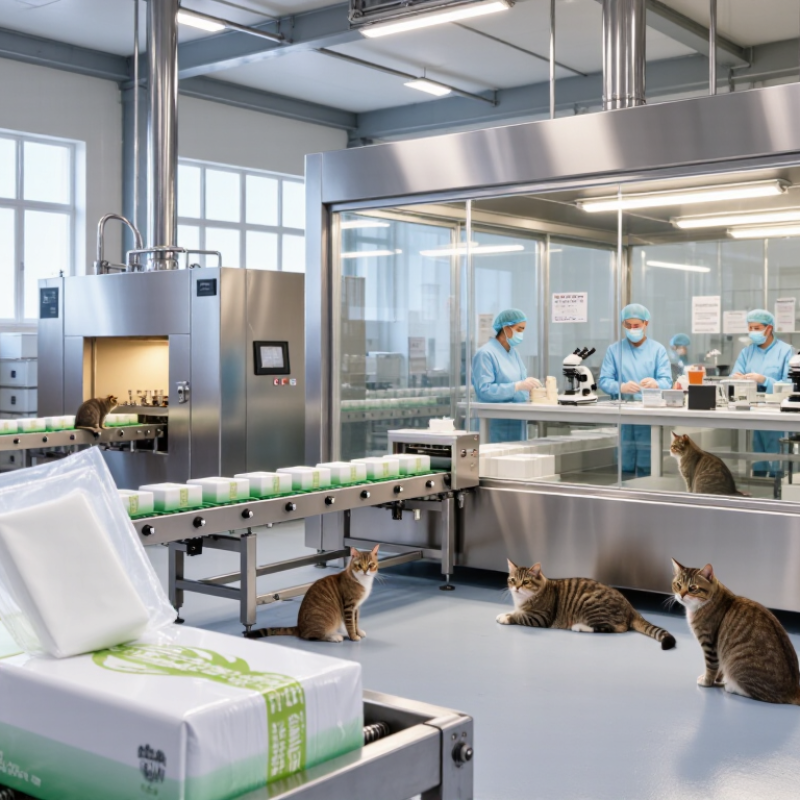
China Top 10 Cat Antiseptic Wipes Manufacturers 2026?

China’s Cat Antiseptic Wipes Market in 2026

China’s cat antiseptic wipes market is becoming more specialized in 2026. Demand is rising from urban households, grooming salons, shelters, and veterinary clinics. Buyers now examine material safety, moisture retention, package sealing, and production consistency. A low price is no longer enough. Cat skin is sensitive, and repeated wiping can expose weaknesses in formulation or fabric quality. This market is practical, not flashy.

Leading Chinese manufacturers generally compete through private-label flexibility, automated converting lines, and export documentation. Strong suppliers should provide ingredient disclosure, batch records, microbial testing, and stability data. They should also explain whether the wipes are intended for paws, fur, or external skin only. That detail matters. A responsible factory avoids exaggerated medical claims and gives clear use instructions.

During evaluation, I would request samples from several production batches, not one polished carton. Inspect sheet texture, tear strength, odor, liquid distribution, and resealing performance after a week.

The top ten discussion should focus on verified capability rather than popularity. Factory audits, responsive technical support, and complaint handling reveal more than a website. Certifications can help, but they do not replace testing or honest communication. Some suppliers still use vague terms such as “natural” or “antibacterial” without enough evidence. Buyers should challenge those claims. I also see room for improvement in recyclable packaging and lower-plastic lids. Progress is visible, but uneven. A careful sourcing decision may require extra time, especially when one cat responds well and another develops irritation.

Criteria for Ranking the Top Ten Chinese Manufacturers

Ranking China’s top ten cat antiseptic wipes manufacturers requires more than checking factory size. The process should examine safety, testing, traceability, and export reliability. Grand View Research valued the global pet care market at about US$246.66 billion in 2023. Its forecast suggests continued growth through 2030. However, market growth does not prove product quality.

Manufacturers should receive higher scores when they provide independent microbial testing, stable formulations, and documented raw-material suppliers. Auditors should review ISO 9001 systems, suitable GMP controls, batch records, and complaint-handling procedures. Each wipe should show clear lot coding, sealed packaging, and consistent moisture levels. Production capacity also matters, but unused capacity can be misleading. APPA reported 66% of U.S. households owned a pet in 2023–2024, showing strong demand for dependable care products. That figure reflects one market, not every region.

Tips: Request recent test reports, not promotional summaries. Confirm testing methods and target microorganisms. Check whether the factory separates clean filling areas from general storage. Ask for retention samples and recall procedures. A practical ranking should also assess delivery accuracy, ethical sourcing, and transparent communication. No ranking is perfect. Some smaller factories may offer stronger quality control than larger exporters, so evidence should outweigh impressive photographs.

China Top 10 Cat Antiseptic Wipes Manufacturers 2026

Criteria for Ranking the Top Ten Chinese Manufacturers

This weighted evaluation model uses measurable procurement and compliance factors commonly applied when comparing manufacturers of pet hygiene products. The percentages represent the relative importance of each criterion in a transparent 100-point ranking framework; no individual company or brand data is included.

Profiles of China’s Ten Leading Cat Wipe Manufacturers

China’s Ten Leading Cat Wipe Manufacturers

China’s leading cat wipe manufacturers differ in materials, testing, and production experience. The first profile represents large OEM facilities with automated folding and sealing lines. The second focuses on soft spunlace fabric for daily paw and coat cleaning. The third develops fragrance-free formulas for sensitive cats.

Gentle matters.

The fourth supplies private-label wipes with flexible packaging options. Its strength is responsive sampling. The fifth combines purified water with mild cleansing ingredients and documents each batch. The sixth specializes in biodegradable or plant-based substrates, although disposal claims still require careful checking.

The seventh profile covers manufacturers with veterinary-informed product development teams. They usually test skin compatibility before wider production. The eighth serves overseas distributors and understands export documentation, carton marks, and moisture retention requirements. The ninth emphasizes leak-resistant packaging, which protects wipes during humid warehouse storage. The tenth offers smaller trial orders for emerging pet-care businesses.

That lowers initial risk.

However, lower minimum quantities may increase unit costs.

A dependable factory should provide ingredient specifications, microbial testing records, production dates, and clear storage guidance. Buyers should also inspect sample texture, sheet strength, scent intensity, and resealing performance. A wipe can feel soft yet tear during use. That detail is easy to miss. Manufacturing quality may vary between batches, even when the sample looks excellent. No facility is perfect, and some catalogues describe sustainability too broadly. Careful audits, repeat testing, and direct communication remain necessary before long-term purchasing decisions.

Product Safety, Ingredients, and Manufacturing Standards

When assessing China’s top cat antiseptic wipes manufacturers for 2026, product safety should come before price or packaging. A reliable facility clearly identifies every ingredient and its purpose. Purified water, gentle cleansing agents, and carefully tested antimicrobial ingredients may support routine cleaning. However, cats can lick residue, so strong fragrances, unnecessary dyes, and harsh solvents deserve close review. “Natural” is not automatically safer.

Manufacturing standards reveal more than a polished website. Look for documented GMP procedures, controlled clean areas, supplier qualification, and batch traceability. Each production batch should receive microbial testing, seal inspection, and stability checks. Independent laboratory reports can help verify claims, but reports must match the actual product and production date. In practical factory evaluations, small details matter: intact packaging, readable lot codes, and consistent wipe moisture. No formula is perfect. Even a well-tested wipe may irritate sensitive skin, and manufacturers should state this honestly. Buyers should also confirm the standards required in their target market.

Tips: Request ingredient specifications, microbial limits, safety data, and recent certificates. Test a small quantity first. Stop use if redness, swelling, or discomfort appears. Avoid wiping eyes, open wounds, or areas cats may continuously lick unless a qualified professional advises it.

China Top 10 Cat Antiseptic Wipes Manufacturers 2026? - Product Safety, Ingredients, and Manufacturing Standards

No. Evaluation Dimension Recommended 2026 Benchmark Relevant Ingredients or Controls Verification Evidence to Request
1 Manufacturing quality system Documented GMP-style procedures covering sanitation, personnel hygiene, batch control, deviation handling, and product release. Controlled master formula, approved suppliers, batch records, cleaning schedules, and traceability procedures. Current third-party audit report, site license, quality manual, sample batch record, and corrective-action records.
2 Applicable manufacturing standard ISO 22716 may support cosmetic-style hygiene and production controls; it does not by itself prove veterinary efficacy or clinical safety. Written procedures must match the intended use: external skin cleaning, wound-area cleaning, or veterinary medicinal use. Certificate scope, certificate validity, audit body, manufacturing address, and confirmation that the certificate covers the relevant production site.
3 Antiseptic active selection The active ingredient should be selected for the labeled use, target microorganisms, exposure time, and contact area. Possible actives include chlorhexidine, hypochlorous acid, povidone-iodine, or quaternary ammonium compounds, subject to local regulations and veterinary review. Full ingredient declaration, active concentration, certificate of analysis, stability data, and evidence supporting the claimed antimicrobial activity.
4 Cat-specific safety profile Formula and labeling should account for feline grooming, accidental oral exposure, sensitive skin, and use near the eyes or mouth. Avoid unsupported essential-oil claims, especially concentrated tea tree oil; avoid unnecessary fragrance, dyes, and high alcohol levels for sensitive applications. Veterinary safety assessment, irritation testing, toxicological review, usage warnings, and instructions for preventing licking until dry.
5 Microbiological quality Finished wipes should meet the microbiological limits applicable to the product category and intended market. Routine testing should address total aerobic microorganisms, yeast and mold, and specified objectionable organisms such as Staphylococcus aureus and Pseudomonas aeruginosa. Independent laboratory reports, sampling plan, test methods, laboratory accreditation, and batch-release microbiology results.
6 Preservation and in-pack protection Preservative effectiveness must be demonstrated throughout the stated shelf life after repeated opening and consumer use. Preservative system, pH, water activity, packaging seal, dispensing design, and compatibility between lotion and substrate. Preservative challenge test where applicable, stability study, package-integrity test, and accelerated-aging results.
7 Wipe substrate and skin compatibility Nonwoven material should be soft, low-lint, adequately wet, and suitable for the intended feline body area. Cellulose, viscose, polyester, polypropylene, or blended substrates; substrate choice can affect absorbency, strength, and lotion release. Material specification, basis weight, tensile strength, lint assessment, lotion-uniformity results, and skin-irritation testing.
8 Antimicrobial performance claims Claims should identify the tested organisms, test method, contact time, and conditions rather than using unsupported terms such as “kills all germs.” Bacterial, yeast, or enveloped-virus claims require separate evidence; laboratory efficacy does not automatically establish veterinary clinical benefit. Complete test reports, method references such as EN or ASTM methods where appropriate, tested concentration, contact time, and product lot number.
9 Stability and shelf life Shelf life should be supported by real-time and, when appropriate, accelerated stability data in the final packaging. Active concentration, pH, odor, color, moisture level, microbial quality, seal performance, and wipe strength should remain within specifications. Stability protocol, time-point results, storage conditions, expiry-date rationale, and transport-temperature assessment.
10 Labeling, traceability, and export readiness Packaging should clearly state intended use, directions, warnings, ingredients, lot number, manufacture date, expiry date, storage conditions, and responsible-market information. Labels should distinguish cosmetic-style cleaning claims from veterinary medicinal or disinfectant claims, which may trigger different regulatory requirements. Artwork review, multilingual label proofs, lot-traceability exercise, product specification, safety data sheet where applicable, and destination-market compliance review.

Note: Manufacturer ranking should be based on verified factory audits, product test reports, regulatory status, complaint history, and batch consistency. Ingredient suitability and legal requirements must be confirmed for the destination market and reviewed by a qualified veterinary or regulatory professional.

How to Select a Reliable Chinese Cat Wipe Supplier

Selecting a reliable Chinese cat antiseptic wipes supplier requires more than comparing prices. APPA’s 2025 National Pet Owners Survey reports that about 49.6 million U.S. households own cats. This expanding customer base increases pressure for safer, traceable hygiene products. Suppliers should provide ingredient specifications, safety data sheets, batch records, and recent microbiological test reports. Ask whether the factory tests pH, moisture content, preservative stability, and microbial limits for every production batch.

Inspect the material closely. The wipe should feel soft, remain moist after opening, and leave no strong chemical odor. Request samples from different batches, not only one attractive sample. Check the nonwoven fabric’s composition, basis weight, sealing quality, and shelf-life evidence. ISO 9001 certification can support process control, but it does not prove that a wipe is safe for cats. A factory audit should examine clean areas, water treatment, pest control, worker hygiene, and complaint handling.

Industry reports from Grand View Research place the global pet care market on a steady growth path through 2030, creating opportunities for capable suppliers and careless ones. That distinction matters. Do not accept “natural” or “antibacterial” claims without test evidence and regulatory review. A supplier willing to explain failed samples may be more dependable than one promising perfection. I would also confirm export experience, labeling controls, production capacity, and written procedures for product recalls. The cheapest quotation can become expensive after leakage, irritation complaints, or inconsistent moisture.

Scroll to Top