China Top 10 Custom Cigar Labels Manufacturers
custom cigar labels do more than decorate a box. They help buyers recognize a brand, distinguish product lines, and judge craftsmanship through details like paper texture, foil, embossing, and type. For manufacturers, consistent color and clean finishing matter just as much as visual impact. A gold-stamped crest can look striking, but only if small lettering remains readable.
The wider label market offers useful context, though it does not measure cigar labels alone. Grand View Research estimated the global labels market at about USD 48.8 billion in 2023 and projected continued growth through 2030. This broad estimate reflects demand across many sectors, so it should not be mistaken for a cigar-label market figure. Label-industry analyst Mike Fairley and the Label Academy provide further context on printing methods and label production. However, I cannot verify a verbatim statement from Fairley specifically about custom cigar labels, so attributing a direct quotation to him would risk misrepresenting his words.
This guide to China Top 10 Custom Cigar Labels Manufacturers focuses on practical comparisons: print quality, material choices, finishing options, consistency, and communication during sampling. A sample can reveal what a sales sheet cannot: whether fine lines hold, foil edges stay sharp, and colors match across batches. These details are easy to overlook. They deserve a closer look. The comparison is not a substitute for checking current specifications or requesting physical samples; supplier capabilities and production results can vary.
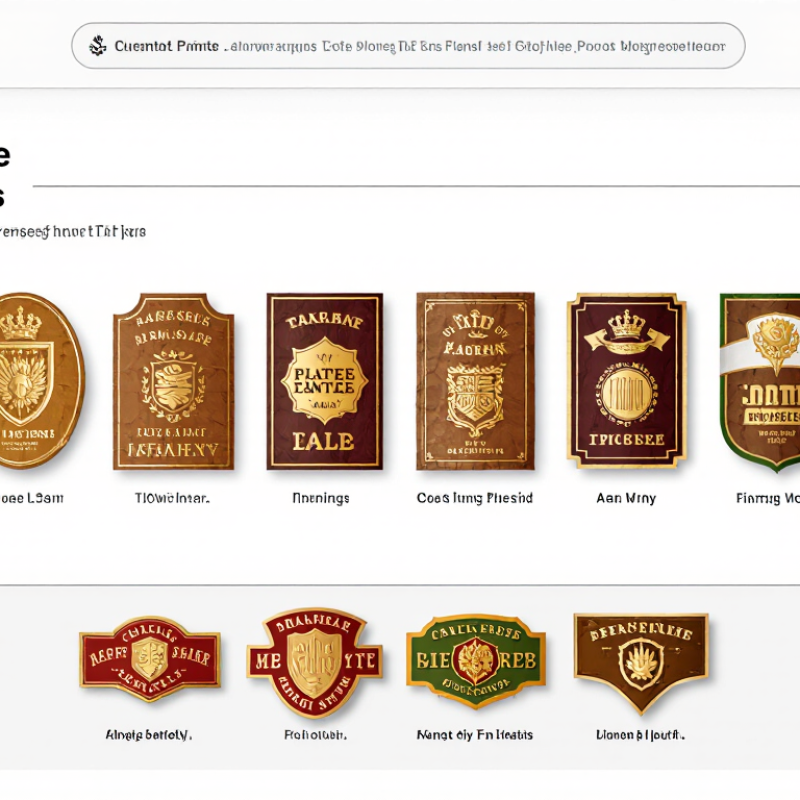
China’s Custom Cigar Label Manufacturing Landscape
China Top 10 Custom Cigar Labels Manufacturers
China’s Custom Cigar Label Manufacturing Landscape
China’s label manufacturing landscape brings together printing, finishing, and converting capabilities. For cigar packaging, buyers often compare paper texture, foil detail, embossing depth, and color consistency. A label may look simple on screen. Under warm lighting, small differences become visible.
Production typically starts with artwork review and a physical proof. Suppliers can discuss paper weight, adhesive performance, and finishes such as metallic foil or raised details. Ask how colors are checked across repeat batches. Request samples under lighting similar to the display environment. Small details matter. A clear approval process helps prevent costly revisions, though it cannot remove every production variation.
Factories differ in equipment, order flexibility, and communication practices. Some may suit large, repeat orders; others may offer more room for smaller runs or custom specifications. Buyers should confirm minimum quantities, sampling fees, production schedules, and packaging methods in writing. They should also ask how humidity and storage conditions may affect paper or adhesive performance. Not every supplier will explain these limits clearly. That is worth reflecting on: a polished sample does not always predict an entire production run. Careful evaluation takes time.
How Custom Cigar Labels Are Designed and Produced
Custom cigar labels are designed around the container, not just a flat artwork file. The designer checks the label’s width, height, wrap overlap, and position against a real sample. Small details matter. A fine border can disappear at the seam, while tiny type may blur on textured paper. The artwork is then prepared with clear color specifications and reserved areas for embossing, foil, or varnish.
Material choice shapes the result. Uncoated paper can feel tactile, while a coated stock may hold sharper color and finer lines. Grand View Research estimated the global labels market at USD 47.42 billion in 2023 and forecast 5.2% annual growth from 2024 to 2030 in its Labels Market report. That broad market figure does not measure cigar labels specifically, but it reflects sustained demand for varied label formats. A proof on the intended stock is essential; screen colors alone can mislead.
Production typically moves from prepress checks to printing, finishing, die-cutting, and inspection. Teams check registration, cut edges, adhesive coverage, and whether the label lifts or wrinkles around the container. Then test it. A sample should be handled under realistic storage conditions, since heat and humidity can affect adhesion. A first proof may look too glossy under warm lighting; that is a useful flaw to catch before the full run.
Criteria for Evaluating Chinese Cigar Label Manufacturers
When comparing Chinese cigar label manufacturers, inspect the physical sample, not just a digital mock-up. Fine lettering should remain crisp, and foil edges should align cleanly with printed details. Small flaws show.
Ask how the supplier controls color across repeat orders. A signed proof, recorded color references, and retained production samples make differences easier to investigate. Check whether paper, coatings, and adhesives suit the label’s intended storage and handling conditions. A label that looks excellent on a desk may behave differently in a warm, humid room. That detail is easy to overlook.
Review quality procedures, production capacity, minimum order quantities, and realistic lead times. Request recent inspection records or a sample checklist, and confirm what happens when a batch falls outside agreed specifications. Certifications can be useful, but verify their scope and validity rather than relying on a logo in a brochure. Clear answers matter more than polished promises. Ask for a written quotation that separates setup, sampling, finishing, packaging, and shipping costs. Communication deserves a practical test: send a small technical question and note how clearly it is answered. Even a careful review cannot remove every risk; samples may not reveal every production variation. Keep that uncertainty in the decision.
Profiles of Ten Custom Cigar Label Manufacturers in China
A useful profile of a Chinese custom cigar label manufacturer should go beyond a product gallery. It should explain printing methods, material choices, finishing options, and sample procedures. Buyers can compare suppliers more fairly when details such as paper weight, foil coverage, color tolerance, and production lead time are clearly stated. Small details matter.
Across ten manufacturer profiles, different strengths may stand out. One supplier may focus on sharp offset printing; another may offer short-run digital work. A third may specialize in metallic foil, while a fourth handles precise embossing. Others may provide textured papers, careful color matching, distinctive die-cut shapes, or combined finishing. Some profiles may emphasize flexible order quantities. Another may document quality checks and sample approval. A tenth may be notable for responsive customization support. These are useful comparison points, not proof of performance.
Look for close-up photos and physical samples, especially where fine lines, raised details, or metallic surfaces are involved. Ask how colors are checked between samples and full production. Confirm which materials and finishes are available before approving artwork. A polished catalog can be reassuring, but it is not enough. Some suppliers provide limited process detail; that gap deserves a direct question, not an assumption.
Typical Cigar Format Lengths for Custom Label Planning
The chart compares representative nominal lengths for five common cigar formats. Actual dimensions can vary by manufacturer; confirm the cigar’s measurements before specifying a custom label.
Comparing Manufacturers by Capabilities, Quality, and Service
Comparing custom cigar label manufacturers requires more than checking quoted prices. Look closely at material options, color control, finishing, and repeat-order consistency. Can a supplier match a small embossed emblem across separate print runs? Ask for physical samples, a documented color standard, and tolerances for trimming and registration. These details matter on a narrow band, where a slight shift can make the design look uneven. Samples reveal a lot.
Production capacity should not eclipse quality checks or service. Smithers’ 2023 report, The Future of Global Packaging to 2028, valued the worldwide packaging market at about US$1.17 trillion in 2023 and forecast US$1.42 trillion by 2028. That broad market figure is not specific to cigar labels, but it highlights the scale and competition shaping packaging supply chains. Compare manufacturers on proofing speed, sample accuracy, defect handling, and clear communication about lead times. Ask how they protect delicate foil details and keep adhesive performance consistent under expected storage conditions. A supplier may offer impressive finishes yet respond slowly when artwork changes. I would not treat a polished catalog as proof of reliable service; the production sample and the way problems are handled are stronger evidence.