Top 10 Benefits of Using White Label Cosmetics for Your Business Growth
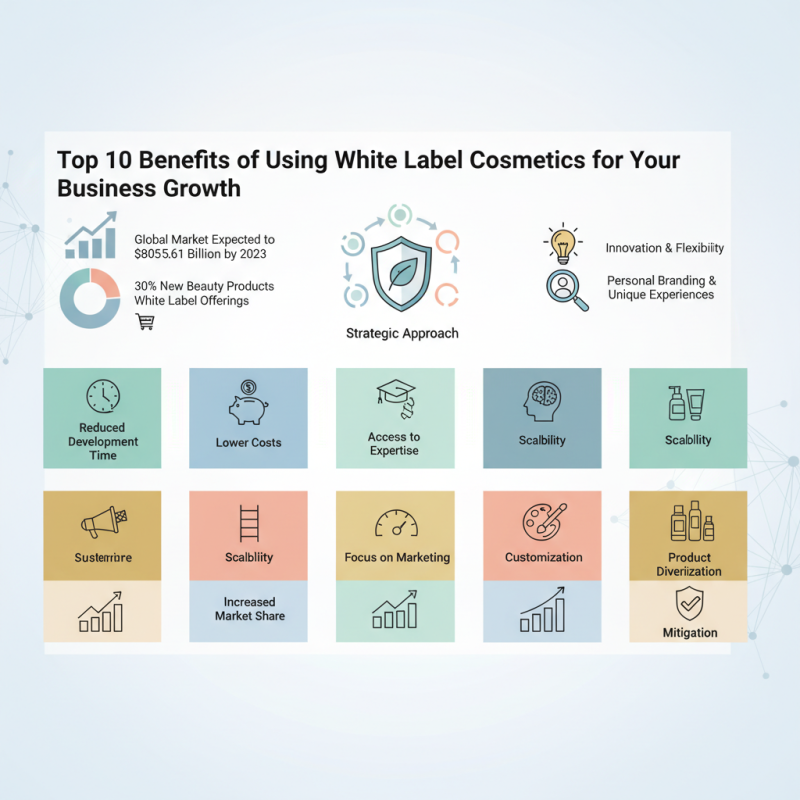
In recent years, the cosmetics industry has witnessed significant growth, with the global market expected to reach USD 805.61 billion by 2023, according to industry reports. Amid this expanding landscape, white label cosmetics have emerged as a strategic approach for businesses seeking to enhance their product offerings without the complexities of traditional manufacturing. By leveraging the advantages of white label solutions, companies can tap into the established expertise and resources of manufacturers while maintaining their brand identity.
The concept of white label cosmetics allows businesses to customize and market products under their own brand, thereby reducing development time and costs. Reports indicate that nearly 30% of new beauty products launched in the previous years were white label offerings, showcasing a trend that favors flexibility and innovation. As consumer preference shifts towards personal branding and unique product experiences, adopting white label cosmetics not only helps businesses cater to these demands but also positions them to scale efficiently in a competitive market. Implementing white label solutions can lead to rapid growth and increased market share, making it a compelling option for both new entrants and established brands looking to expand their portfolio.
Benefits of Cost-Effective Production in White Label Cosmetics
White label cosmetics offer an array of advantages for businesses, particularly in terms of cost-effective production. According to a report by Allied Market Research, the global cosmetic market is expected to reach $805.61 billion by 2023, prompting many entrepreneurs to seek ways to enter this lucrative industry without the high overhead costs often associated with traditional manufacturing. By opting for white label products, businesses can avoid significant capital investments in production facilities and equipment while still providing high-quality products to their customers.
Utilizing white label cosmetics allows for streamlined production processes, as manufacturers take on the responsibility of formulation, packaging, and compliance with regulatory requirements. This efficiency not only reduces the time to market but also decreases associated labor costs. A survey from Grand View Research indicated that about 60% of beauty startups reported a preference for sourcing products from white label providers to maintain lower operational costs. This cost-effectiveness can enhance profit margins and enable companies to allocate resources to marketing and customer engagement strategies, thus fostering overall business growth.
Top 10 Benefits of Using White Label Cosmetics for Your Business Growth - Benefits of Cost-Effective Production in White Label Cosmetics
| Benefit |
Description |
Cost Savings (%) |
Time to Market (Months) |
| High-Quality Ingredients |
Access to premium formulations without extensive R&D. |
30% |
2-3 |
| Brand Customization |
Ability to create a unique brand identity. |
20% |
1-2 |
| Reduced Risk |
Decrease in financial risk associated with production. |
15% |
0-1 |
| Flexibility of Products |
Easily expand product lines by adding new items. |
25% |
2-3 |
| Scalability |
Easily scale operations without maximum complexity. |
10% |
1-2 |
| Diverse Product Range |
Access to a variety of cosmetics without extensive choice. |
22% |
2-4 |
| Enhanced Focus on Marketing |
More time for marketing strategies and brand building. |
18% |
1 |
| Easier Compliance |
Manufacturers are responsible for regulatory requirements. |
12% |
0-1 |
| Cost-Effective Marketing |
Lower marketing costs with existing brand awareness. |
17% |
1-2 |
Increased Brand Flexibility and Customization Opportunities
White label cosmetics offer businesses a unique opportunity for increased brand flexibility and customization. By leveraging these ready-made products, companies can tailor formulations, packaging, and branding to suit their target demographics without the heavy lifting of product development. According to industry reports, the global private label cosmetics market is projected to grow at a CAGR of over 7% by 2025. This growth is largely driven by consumer demand for personalized products, allowing retailers to establish a more distinctive brand identity in a crowded marketplace.
Implementing white label cosmetics into your business strategy can provide not just customization but also the agility to respond quickly to emerging trends. By maintaining control over branding elements—such as logo, color schemes, and packaging design—businesses can create a cohesive brand experience that resonates with their audience. A recent study indicated that 60% of consumers prefer brands that offer personalized products, emphasizing the importance of flexibility in meeting customer preferences.
Tip: Regularly collect customer feedback on your products and branding to refine your offerings. This approach not only fosters customer loyalty but also ensures your brand stays aligned with market demands. Additionally, consider seasonal or limited-edition product variations to keep your brand fresh and engaging.
Top 10 Benefits of Using White Label Cosmetics for Your Business Growth
Access to Established Supplier Networks and Expertise
Utilizing white label cosmetics offers businesses a significant advantage through access to established supplier networks and expertise. By partnering with experienced manufacturers, companies can tap into their extensive knowledge of product development, formulation, and quality control. These suppliers often have a strong foothold in the beauty industry, which allows businesses to leverage their insights for trend forecasting and consumer preferences.
This collaboration not only accelerates product development but also enhances the overall quality of offerings, ensuring that businesses can compete effectively in a saturated market.
Moreover, established supplier networks provide logistical support that is crucial for timely delivery and efficient inventory management. With a reliable supply chain in place, businesses can focus more on marketing and branding rather than being bogged down by the complexities of production and sourcing.
This strategic partnership allows for continuous innovation, as suppliers often stay at the forefront of industry advances and regulations, ensuring that products remain compliant and relevant. By integrating these established networks and expertise, businesses can streamline operations, reduce costs, and ultimately drive growth in a competitive landscape.
Enhanced Market Speed and Competitive Advantage
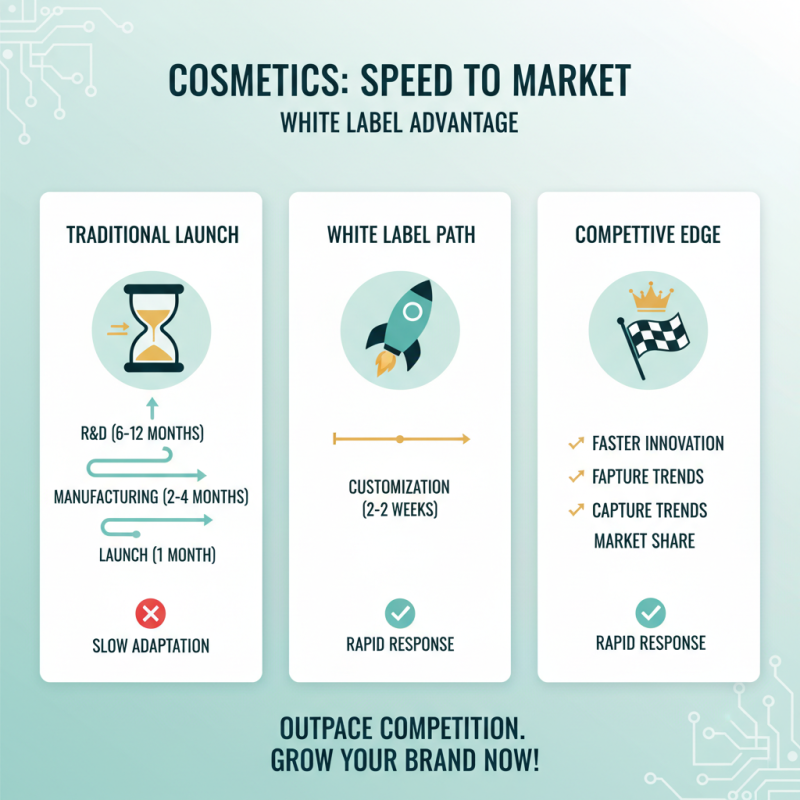
Enhancing market speed and gaining a competitive advantage are crucial for businesses in the fast-paced world of cosmetics. Utilizing white label cosmetics allows companies to quickly introduce new products without the lengthy research and development processes typically associated with launching a brand. By leveraging existing formulations, businesses can significantly reduce their time to market, allowing them to respond swiftly to industry trends and consumer demands. This agility not only helps in seizing opportunities but also positions companies ahead of competitors who may be slower to adapt.
Moreover, white label cosmetics offer a unique opportunity for brands to differentiate themselves in a saturated market. By customizing packaging and marketing strategies, businesses can create a distinct identity while benefiting from proven product effectiveness. This strategy not only streamlines operations but also fosters consumer trust, as customers often equate brand recognition with quality assurance. As a result, companies can maintain a competitive edge by offering a broader range of products more efficiently, ultimately driving growth and securing a stronger foothold in the cosmetics industry.
Improved Focus on Marketing and Customer Engagement Strategies
Using white label cosmetics allows businesses to concentrate more effectively on marketing and customer engagement strategies. By leveraging pre-formulated products, companies can allocate their resources towards creating impactful marketing campaigns and enhancing customer interactions. This shift in focus ensures that businesses can build their brand identity while still delivering quality products without the burden of product development.
Tips for a successful marketing strategy include identifying your target audience and tailoring your messaging to resonate with them. Engaging with customers through social media platforms can also foster a sense of community around your brand. Additionally, consider implementing loyalty programs that reward repeat customers, enhancing retention and encouraging word-of-mouth referrals.
Another crucial aspect of customer engagement is soliciting and acting upon feedback. Regularly asking for customer opinions not only demonstrates that you value their input but also provides insights into their preferences, allowing your marketing strategies to evolve effectively. By prioritizing these elements, businesses in the cosmetics industry can thrive while maintaining a strong focus on their marketing efforts.