2026 Top Private Label Beauty Products for Global Buyers

The 2026 beauty market rewards private label beauty products that combine clear benefits, dependable quality, and practical pricing. Global buyers now examine more than attractive packaging. They review ingredient documentation, stability data, manufacturing standards, labeling accuracy, and supply consistency before placing serious orders. A serum may look premium on a screen, yet its texture, scent, and pump performance decide whether customers reorder.

This guide explores high-potential categories for international buyers, including facial care, scalp treatments, body care, sun protection, and minimalist makeup. It focuses on products that can adapt to different climates, skin preferences, and retail channels. Buyers will also find considerations for minimum order quantities, recyclable packaging, batch traceability, and responsible product claims. These details often separate a promising sample from a commercially reliable launch.

No category fits every market. That is the difficult part. Consumer habits change quickly, and trend reports can become outdated before a shipment arrives. A product popular in Seoul may need different textures for dry European winters or humid Gulf climates. Experienced sourcing teams should test samples locally, verify supplier credentials, and consult qualified regulatory professionals before selling. This article does not replace that work. It offers a practical starting point for comparing opportunities, reducing avoidable risks, and choosing private label beauty products with stronger long-term potential.
2026 Top Private Label Beauty Products for Global Buyers

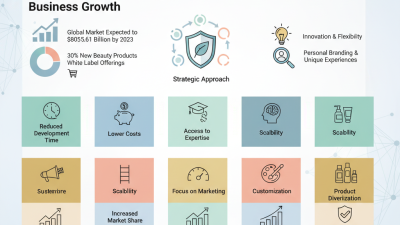
2026 Beauty Market Scope: $590B Forecast by 2028 (McKinsey)

2026 Top Private Label Beauty Products for Global Buyers

2026 Beauty Market Scope: $590B Forecast by 2028 (McKinsey)

McKinsey’s projected $590 billion beauty market by 2028 signals room for new private label products. Yet growth alone does not guarantee sales. Global buyers need evidence, not optimistic catalog language. In 2026, practical categories may include gentle cleansers, barrier-support moisturizers, scalp care, and lightweight sun protection. Demand varies sharply by climate, age group, and local routine. A humid market may favor fast-absorbing gels. Dry regions may prefer richer creams.

Market Insight McKinsey’s projected $590 billion beauty market by 2028 signals room for new private label products.

Reliable sourcing starts with documented formulas, stable ingredient specifications, and batch-level quality checks. Ask suppliers for safety assessments, microbiological testing, stability data, and packaging compatibility records. Product claims should remain narrow and supportable. “Hydrates skin” is easier to substantiate than “repairs every concern.” Check labeling, allergens, language, recycling marks, and notification rules in each destination. Regulations differ, and one universal label can create costly delays. Samples should be tested under realistic heat, cold, and shipping conditions.

Packaging also affects margins. Airless pumps can protect sensitive formulas, but they may raise unit costs. Refill systems sound attractive, yet customer adoption remains uneven. A common sourcing lesson is that minimum order quantities can exceed realistic demand. Start with a controlled launch and measure repeat purchases, returns, texture feedback, and complaint patterns. Test before scaling. Forecasts are useful, but they are not proof. Some trends will cool before production finishes. Buyers who leave room to revise formulas, pack sizes, and claims may build more resilient private label portfolios.

Private-Label Skincare: The Largest Category in Global Beauty (NIQ)

2026 Top Private Label Beauty Products for Global Buyers

Private-label skincare remains the largest category in global beauty, according to NIQ. Its strength comes from repeat use, visible routines, and broad consumer needs. Cleansers, moisturizers, serums, and sun-care products fit many retail formats. Buyers can also adjust textures, package sizes, and fragrance levels for local preferences.

Experience shows that a promising sample is only the beginning. A reliable supplier should provide ingredient documentation, stability results, safety assessments, and consistent batch records. Product claims must match test evidence. “Brightening” needs careful wording and support. Local regulatory review also matters, because permitted ingredients and labeling rules differ across markets. Proof matters.

Skincare development is rarely perfect on the first attempt. A cream may feel rich in a cool warehouse but become heavy in humid conditions. A pump can look elegant yet fail during repeated testing. Buyers should review samples after transport, opening, and several weeks of use. Small details decide customer trust. NIQ’s category insight is valuable, but market rankings can change by country, channel, and measurement period. Global buyers should combine that authority with current sales data and direct product testing. A careful launch may require fewer products, clearer claims, and more time than expected.

Haircare and Scalp Care: A 6% Annual Growth Opportunity (McKinsey)

2026 Top Private Label Beauty Products for Global Buyers

Haircare and scalp care are moving beyond basic cleansing. McKinsey & Company’s 2023 beauty analysis projects approximately 6% annual growth for the global beauty market through 2027. Meanwhile, Grand View Research estimates the global haircare market will expand steadily through 2030, supported by demand for scalp treatments, mild formulas, and targeted solutions.

This creates a practical opening for private label development. Buyers can explore shampoos for oily scalps, lightweight conditioners, exfoliating scalp treatments, and leave-in products for dry hair. Packaging should show clear usage steps. A 150 ml treatment bottle feels more suitable for testing than a large family-size format.

Small details matter.

Kline’s professional beauty research has repeatedly identified scalp care as a growing innovation area, especially where consumers connect scalp condition with hair appearance. That link supports products featuring familiar ingredients, such as salicylic acid, niacinamide, panthenol, or zinc compounds, when permitted by local regulations. Claims still require careful substantiation.

The weak point is obvious: growth figures do not guarantee product success. McKinsey’s forecast reflects the wider beauty sector, not every scalp-care launch. Buyers should test stability, fragrance tolerance, packaging leakage, and repeat-purchase behavior across markets. A formula that performs well in a humid warehouse may feel too heavy in a dry climate. That risk is easy to underestimate.

2026 Top Private Label Beauty Products for Global Buyers — Haircare and Scalp Care: A 6% Annual Growth Opportunity (McKinsey)
Data Dimension 2026 Indicator Buyer Relevance Product or Sourcing Direction
Market Opportunity Overview
Annual market growth assumption 6% annual growth Supports continued investment in differentiated hair and scalp-care portfolios. Prioritize products with repeat-purchase potential, clear claims, and scalable manufacturing.
Main product categories Shampoo Conditioner Scalp serum Treatment mask Exfoliating scrub Rinse-off products drive frequency, while leave-on treatments support premium positioning. Build a routine-based range: cleanse, condition, treat, and maintain.
High-interest consumer needs Visible flake control, oil balance, hair strengthening, hydration, damage repair, and sensitive-scalp care Need-state positioning is easier to communicate across international markets than highly localized trends. Use compliant cosmetic wording such as “helps reduce visible flakes” or “supports a balanced scalp.”
Priority market clusters North America, Western Europe, East Asia, Southeast Asia, Australia, and Gulf markets These regions combine developed beauty retail, e-commerce activity, and demand for specialized haircare. Prepare market-specific labeling, language, ingredient, and claim reviews before launch.
Top Private Label Product Opportunities
Balancing shampoo Gentle cleansing with oil-control and scalp-comfort positioning Broad consumer appeal and high replenishment frequency. Consider mild surfactant systems, low-irritation fragrance options, and a pH typically around 4.5–5.5.
Hydrating conditioner Slip, softness, detangling, and reduced appearance of dryness Pairs naturally with shampoo and increases basket value. Use conditioning agents, emollients, and humectants suitable for the target hair type.
Scalp serum or tonic Lightweight leave-on format for scalp hydration and comfort Supports premium pricing and direct-to-consumer education. Common pack sizes include approximately 30–100 ml; select airless or controlled-dispensing packaging where appropriate.
Scalp exfoliating treatment Pre-shampoo product designed to remove surface buildup Addresses product buildup and oil-management concerns without requiring a daily-use format. Choose physical or chemical exfoliation carefully and include clear frequency guidance.
Repair hair mask Rich treatment for dry, colored, chemically treated, or heat-styled hair Creates an upgrade path from basic cleansing products. Typical consumer-use formats range from approximately 200–500 g, depending on packaging and market preference.
Sensitive-scalp cleanser Minimalist formula with low-fragrance or fragrance-free options Helps serve consumers who avoid strong scent or harsh-feeling products. Use conservative claims, transparent ingredient communication, and appropriate irritation and stability testing.
Technical and Commercial Benchmarks
Recommended format mix 60–70% rinse-off products; 30–40% leave-on and treatment products Balances high-frequency essentials with higher-value specialty products. Launch with a focused 4–6 SKU routine before expanding into niche treatments.
Typical consumer pack sizes Shampoo and conditioner: approximately 250–500 ml; treatments: approximately 30–500 ml or g Allows entry, standard, and professional-size options. Use smaller formats for trial and travel, and larger formats for household replenishment.
Formula pH guidance Many hair products are formulated within a mildly acidic range, commonly around pH 4.5–6.0 Supports hair-fiber feel and scalp comfort when appropriate for the formula. Confirm the final pH through laboratory testing and product-specific compatibility studies.
Shelf-life planning Often 24–36 months unopened, subject to formula, packaging, and stability results Important for international shipping, warehousing, and retail sell-through. Validate with accelerated, real-time, packaging-compatibility, and preservative-effectiveness testing.
Packaging priorities Leak resistance, moisture protection, controlled dispensing, and recyclable material choices Reduces transit damage and supports sustainability requirements. Use tubes, pumps, bottles, or airless packs according to viscosity, oxidation sensitivity, and usage behavior.
Claim substantiation Claims should be supported by ingredient evidence, consumer testing, instrumental testing, or other suitable documentation Reduces regulatory and retailer risk in multiple markets. Separate cosmetic claims from therapeutic claims and review all wording before artwork approval.
Global Buyer Evaluation Checklist
Regulatory readiness Ingredient restrictions, safety assessment, product notification, labeling, and responsible-party requirements vary by market Compliance gaps can delay customs clearance and retail listing. Obtain a market-by-market compliance review before production and export.
Quality documentation Certificate of analysis, microbiological results, stability data, batch records, and safety documentation Improves buyer confidence and supports traceability. Require document control, lot traceability, retained samples, and defined release specifications.
Sustainability indicators Recyclability, material reduction, recycled content, refill potential, and responsible ingredient sourcing Supports retailer requirements and consumer transparency. Use measurable packaging and sourcing statements rather than broad, unverified environmental claims.
Best launch strategy Core routine plus one differentiated scalp-care hero product Creates a clear consumer journey while limiting initial inventory complexity. Recommended starter range: balancing shampoo, hydrating conditioner, repair mask, and scalp serum.
Key risks to manage Unsupported claims, formula instability, fragrance sensitivity, leakage, inconsistent viscosity, and regional compliance differences These issues can increase returns, relabeling costs, and launch delays. Complete pilot production, packaging trials, stability testing, and regulatory review before commercial scale-up.
Planning note: The 6% figure is presented as the annual growth assumption stated in the title. Product specifications and ranges are practical industry benchmarks and should be validated for the final formula, packaging system, destination market, and applicable regulations.

Makeup and Color Cosmetics: Mass-Market Demand Across Global Regions (Circana)

Makeup and color cosmetics remain strong private label opportunities, especially where buyers balance visible results with accessible pricing. Circana reported that U.S. prestige beauty sales rose 8% in 2024, reaching $33.9 billion. Makeup contributed to this momentum, while mass-market shoppers remained highly value-conscious.

For global buyers, practical hero products include liquid blush, tinted complexion products, brow gels, lip stains, and buildable eyeshadow palettes. These formats suit short routines and social-commerce demonstrations. Regional preferences still differ. Warm undertones often perform well in many tropical markets, while lighter, neutral, and olive shades require careful local testing. Shade range matters. A large assortment can also create slow inventory.

Circana’s 2024 U.S. data showed continued growth across prestige and mass beauty, but growth was uneven by category and channel. NIQ’s global beauty research also highlights stronger consumer interest in multifunctional products and affordable innovation. Private label developers should therefore test texture, wear time, packaging durability, and color accuracy before scaling production. A compact with a mirror may improve everyday use, but it can increase packaging cost and shipping weight. That trade-off deserves review. Claims should rely on substantiated testing, clear ingredient communication, and market-specific compliance checks. Consumer feedback from small regional launches is often more useful than a broad forecast. Forecasts can be wrong.

Sourcing Standards: EU Cosmetics Rules and ISO 22716 Compliance (ISO)

For global buyers, EU cosmetics compliance must be checked before private label production begins. The EU Cosmetics Regulation requires a designated Responsible Person, a Product Information File, a Cosmetic Product Safety Report, and CPNP notification. Labels must show required details, including ingredients, nominal content, precautions, and durability information.

ISO 22716 provides a practical Good Manufacturing Practice framework. It covers hygiene, staff training, batch records, equipment cleaning, water quality, warehouse control, and product traceability. Buyers should review production samples, deviation reports, corrective actions, and recall procedures. ISO 22716 certification supports confidence, but it does not replace EU legal obligations or a proper safety assessment.

Look closely at claims and packaging. Each claim should have suitable evidence, while allergens, nanomaterials, and restricted ingredients may require extra review. Check stability data and packaging compatibility under realistic storage conditions. Request written change-control procedures before approving a formula. A supplier may present excellent documents, yet weak traceability can still create risk. This is easy to miss. No compliance file is perfect, so buyers should record open questions and assign clear deadlines for corrections.

Scroll to Top